

Retatrutide dose clinical research investigating A1C reduction in type 2 diabetes: Clinical Trial Doses, Weight Loss Results, and Safety: Retatrutide dose research has attracted significant attention in 2026 following encouraging Phase 3 clinical trial results from Eli Lilly. The investigational weight-management drug has been studied at several doses, including 2 mg, 4 mg, 9 mg, and 12 mg, with researchers examining how different treatment levels affect body weight, blood sugar, and tolerability.
In September 2026, Eli Lilly announced detailed findings from the TRIUMPH-2 Phase 3 clinical trial. Participants receiving the 12 mg retatrutide target dose achieved an average body weight reduction of 20.8% over 80 weeks in the company’s efficacy analysis. The study also reported improvements in hemoglobin A1C, an important measure of long-term blood sugar control in people with type 2 diabetes.
These results have raised important questions about retatrutide dosage, the differences between trial doses, and whether higher doses consistently produce better outcomes.
However, there is a crucial distinction between a retatrutide dose studied in a clinical trial and a medically approved dose. Retatrutide remains an investigational drug, and the US Food and Drug Administration (FDA) has not approved it for routine treatment of obesity or type 2 diabetes.
This comprehensive guide examines the available scientific evidence, explains the clinical trial dose groups, compares published weight-loss and A1C findings, discusses side effects, and addresses frequently asked questions about retatrutide dosing research.
What Is Retatrutide?
Retatrutide, also known by its development identifier LY3437943, is an investigational medication developed by Eli Lilly. It belongs to a developing class of drugs known as triple hormone receptor agonists.
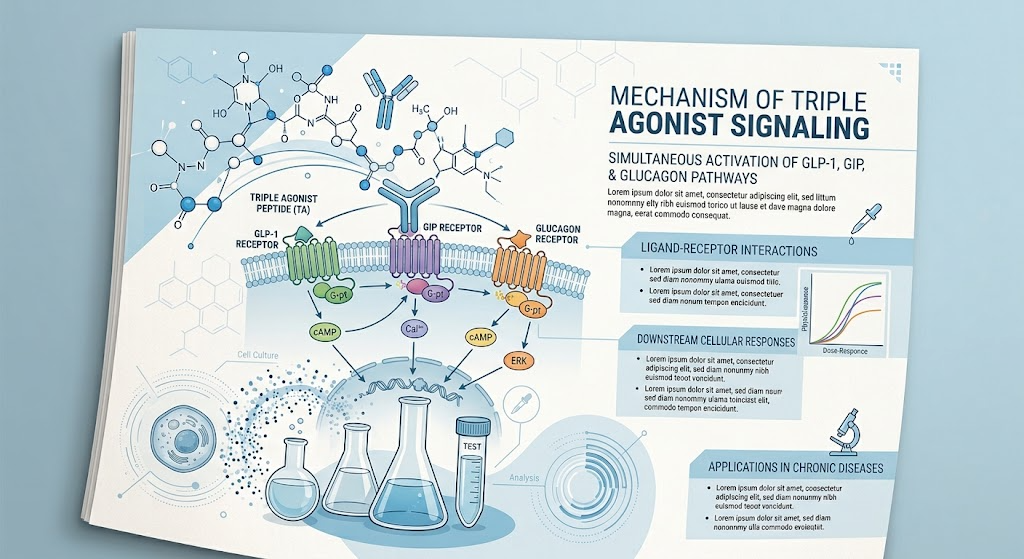
Unlike medications that target one or two hormone receptors, retatrutide is designed to activate three receptors involved in metabolic regulation:
- Glucagon-like peptide-1 (GLP-1) receptor
- Glucose-dependent insulinotropic polypeptide (GIP) receptor
- Glucagon receptor
These hormones participate in appetite regulation, insulin activity, glucose metabolism, and energy balance.
Researchers are investigating whether activating all three receptors through a single molecule can produce substantial reductions in body weight while improving metabolic health.
Retatrutide is being evaluated in clinical trials involving obesity, overweight, type 2 diabetes, obstructive sleep apnea, and other weight-related conditions.
Why Is Retatrutide Called a Triple Agonist?
The term triple agonist describes the drug’s ability to activate three different hormone receptors.
GLP-1 receptor activation is associated with appetite regulation, insulin secretion in response to glucose, and delayed gastric emptying.
GIP receptor activation contributes to glucose-dependent insulin signaling and may influence the overall metabolic effects of treatment.
Glucagon receptor activation has complex effects on metabolism, including pathways associated with energy expenditure and glucose production.
Researchers are studying whether these combined actions can produce meaningful clinical benefits.
The interaction among these pathways is complex, and the contribution of each receptor to retatrutide’s overall effects is still being investigated.
How Is Retatrutide Different From Other Weight-Loss Drugs?
Retatrutide differs from semaglutide and tirzepatide in the number of hormone receptors it targets.
Semaglutide acts primarily through the GLP-1 receptor. Tirzepatide activates both GIP and GLP-1 receptors. Retatrutide adds glucagon receptor activity to the combination.
This additional receptor activity is one reason researchers are interested in retatrutide’s potential effects on weight and metabolism.
However, a different mechanism does not automatically establish that one medication is safer or more effective than another.
Reliable comparisons require appropriately designed clinical trials, consideration of different patient populations, and evaluation of both benefits and risks.
Retatrutide Dose: What Doses Have Been Studied?
The retatrutide dose used in research varies according to the clinical trial, the population being studied, and the study’s objectives.
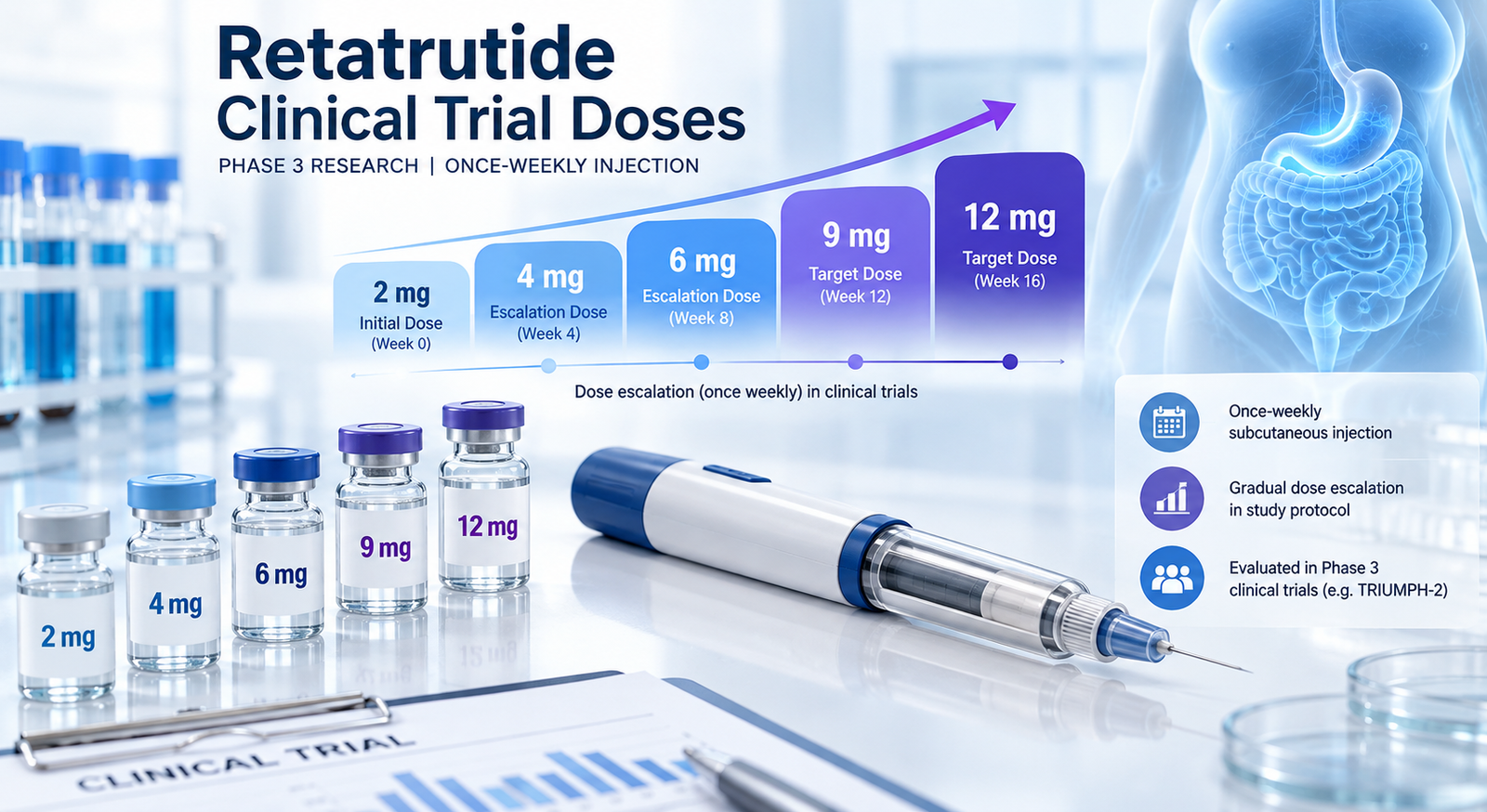
Clinical development has included several dose levels, but the most important distinction is between an initial trial dose, intermediate escalation doses, and the intended maintenance or target dose assigned by the research protocol.
In the TRIUMPH-2 Phase 3 study, researchers evaluated three target-dose groups: 4 mg, 9 mg, and 12 mg.
Participants assigned to active treatment began with a lower dose and underwent protocol-controlled escalation before reaching their assigned target.
Retatrutide Dose Levels in Phase 3 Research
| Dose | Role in Clinical Research | Important Context |
|---|---|---|
| 2 mg | Initial dose used in the TRIUMPH-2 escalation protocol | Not an FDA-approved starting dose |
| 4 mg | Phase 3 target dose and an escalation level | Evaluated for efficacy and tolerability |
| 6 mg | Intermediate escalation level | Not a separate TRIUMPH-2 target-dose group |
| 9 mg | Phase 3 target dose and an escalation level | Studied for weight and glucose outcomes |
| 12 mg | Highest TRIUMPH-2 target dose | Associated with the largest average weight reduction in the reported efficacy analysis |
These values are descriptions of the published clinical study design. They should not be interpreted as a treatment schedule for personal use.
What Is a Target Dose?
A target dose is the dose that a clinical trial participant is assigned to reach according to the study protocol.
Researchers may begin treatment at a lower level and gradually increase it under medical supervision.
This approach helps investigators evaluate how participants tolerate treatment while attempting to reach the planned study dose.
A target dose is not necessarily the best dose for every patient.
The optimal balance between effectiveness and adverse effects may differ across individuals, particularly when participants have other medical conditions or take additional medications.
Why Are Multiple Retatrutide Doses Studied?
Clinical researchers evaluate multiple doses to understand the relationship between the amount of drug administered and its effects.
This relationship is called the dose-response relationship.
A dose-response investigation may help answer several questions:
- Does a higher dose produce greater average weight reduction?
- Are improvements in blood sugar similar across different doses?
- Do gastrointestinal adverse effects increase with dose?
- How many participants discontinue treatment because of side effects?
- Is there a dose that provides substantial benefit with better tolerability?
These questions are important because the most effective dose on a single outcome is not necessarily the most appropriate dose from an overall benefit-risk perspective.
Retatrutide Dose Escalation in Clinical Trials
Retatrutide dose escalation is an important part of the investigational treatment strategy.
In TRIUMPH-2, the published study protocol used once-weekly administration and gradual dose increases at four-week intervals until participants reached their assigned target dose.
This was a controlled research procedure involving eligibility assessments, monitoring, predefined protocols, and clinical oversight.
It was not an approved prescribing schedule.
Why Did Researchers Use Gradual Dose Escalation?
Medications with GLP-1 receptor activity frequently cause gastrointestinal symptoms, particularly during treatment initiation and dose increases.
These effects can include nausea, vomiting, diarrhea, constipation, and reduced appetite.
A gradual escalation strategy allows researchers to study tolerability while participants transition toward their assigned target dose.
It may also help researchers identify adverse effects that occur during different stages of treatment.
However, gradual escalation does not eliminate the possibility of serious or unexpected adverse events.
Retatrutide Dose Escalation Versus Maintenance Dose
The terms dose escalation and maintenance dose are related but have different meanings.
Dose escalation refers to the process of increasing the amount of medication according to a research protocol.
A maintenance or target dose is the planned level used for continued evaluation after the escalation period.
For example, a participant assigned to the 12 mg group in TRIUMPH-2 did not begin the study at 12 mg.
Instead, the participant followed the trial’s predefined escalation process under supervision.
This distinction matters when interpreting results because an 80-week outcome represents the complete treatment period, not necessarily 80 weeks at the final target dose.
Can the Retatrutide Dose Be Adjusted Independently?
No established self-adjustment instructions exist for retatrutide because the drug has not received FDA marketing approval.
Published clinical trial protocols are designed for research teams and enrolled participants.
They are not substitutes for an approved medication label, individualized medical evaluation, or prescribing guidance.
Individuals should not use research-grade or unapproved retatrutide products to recreate clinical trial dosing.
Retatrutide Dose and Weight Loss: Phase 3 Results
One of the main reasons for growing interest in retatrutide dose research is the substantial weight reduction reported in clinical studies.
The TRIUMPH-2 trial evaluated retatrutide in adults with type 2 diabetes and obesity or overweight.
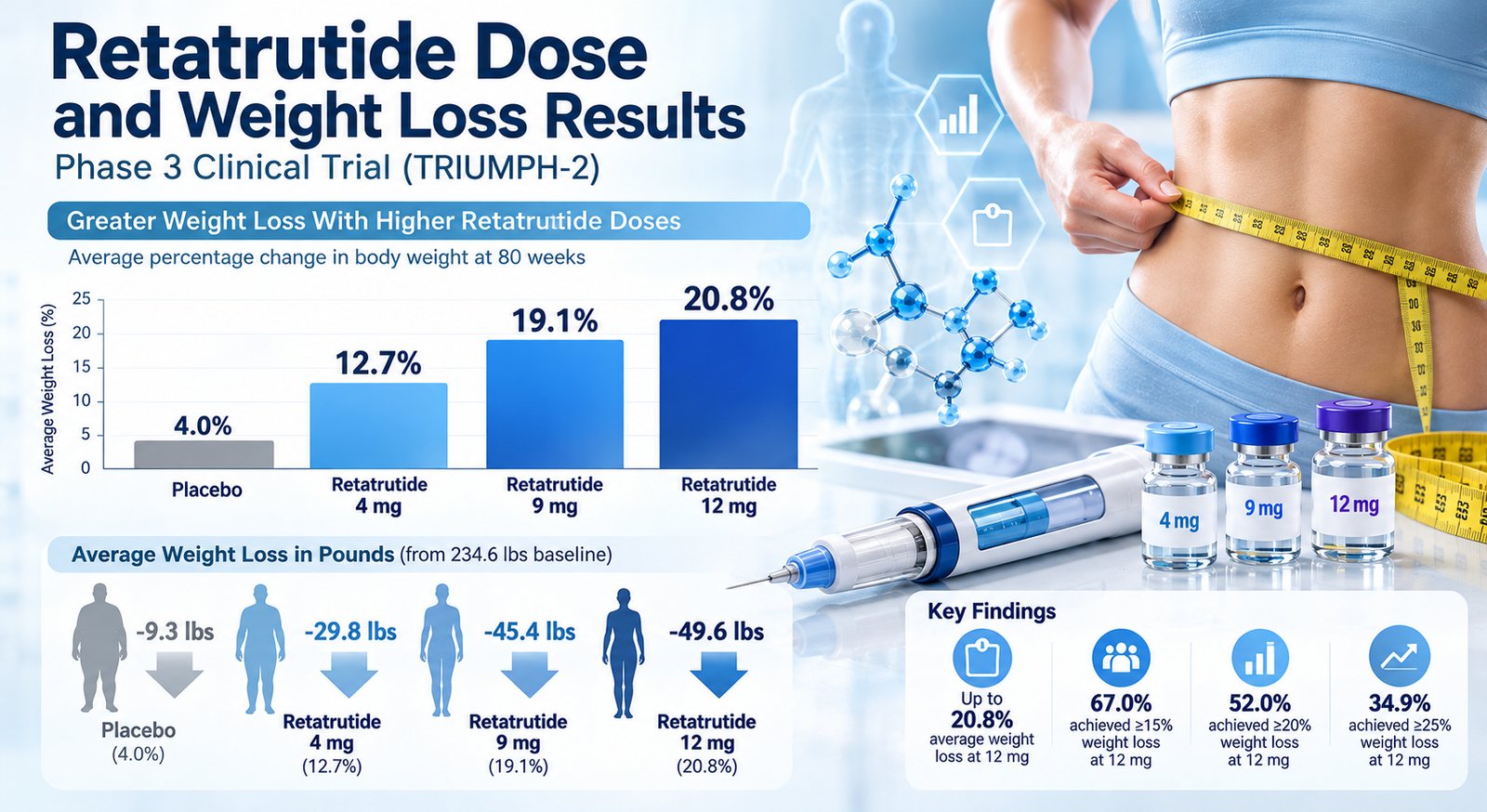
The study enrolled 1,152 participants and compared three retatrutide target doses with placebo over 80 weeks.
According to Eli Lilly’s September 29, 2026 announcement, all three active-dose groups experienced greater average weight loss than the placebo group in the company’s reported efficacy analysis.
Retatrutide Dose Comparison: 4 mg, 9 mg, and 12 mg
| Treatment Group | Average Weight Loss at 80 Weeks | Average Weight Loss in Pounds |
|---|---|---|
| Retatrutide 4 mg | 12.7% | 29.8 lb |
| Retatrutide 9 mg | 19.1% | 45.4 lb |
| Retatrutide 12 mg | 20.8% | 49.6 lb |
| Placebo | 4.0% | 9.3 lb |
Source: Eli Lilly’s September 2026 TRIUMPH-2 efficacy-estimand results.
The average baseline body weight was approximately 234.6 pounds.
These are group averages from a clinical trial, not predictions of what an individual will lose.
The efficacy estimand represents a particular statistical approach that estimates outcomes under specified assumptions about treatment continuation and other factors.
Other analyses of the same study can produce different numerical estimates.
Retatrutide 4 mg: What Did the Study Find?
The 4 mg group achieved an average weight reduction of 12.7% in the company’s reported efficacy analysis.
This finding suggests that the lower target-dose group had measurable effects on body weight in the studied population.
However, the result does not establish 4 mg as an approved, recommended, or universally appropriate dose.
Clinical decision-making would require a full assessment of the drug’s efficacy, safety, and regulatory status.
Retatrutide 9 mg: What Did the Study Find?
Participants assigned to the 9 mg target dose achieved an average weight reduction of 19.1%.
This was substantially greater than the average reduction reported in the 4 mg group.
The result provides evidence of a dose-response pattern for weight loss within the trial.
However, interpreting the clinical significance of the difference requires consideration of statistical analyses, adverse events, and the overall benefit-risk profile.
Retatrutide 12 mg: What Did the Study Find?
The 12 mg group achieved the largest average weight reduction among the three active-dose groups in the reported efficacy analysis.
Participants lost an average of 20.8% of their baseline body weight over 80 weeks.
Among participants who began the study with a body mass index of at least 35, the 12 mg group had an average weight reduction of 23.4%.
These findings are promising from a research perspective, but they do not demonstrate that 12 mg is the best choice for everyone.
Higher doses may also be associated with additional tolerability concerns.
Does a Higher Retatrutide Dose Always Produce Better Results?
Not necessarily.
The TRIUMPH-2 results showed increasing average weight reduction across the 4 mg, 9 mg, and 12 mg groups.
Nevertheless, average weight loss is only one aspect of treatment effectiveness.
Researchers must also consider glycemic control, adverse effects, discontinuation rates, participant characteristics, and long-term safety.
For some outcomes, the differences between dose groups may be relatively small.
For other outcomes, higher doses may create greater treatment burden without a proportional improvement in clinical benefit.
This is why dose selection in drug development requires more than simply identifying the highest number associated with weight loss.
Retatrutide Dose and Type 2 Diabetes
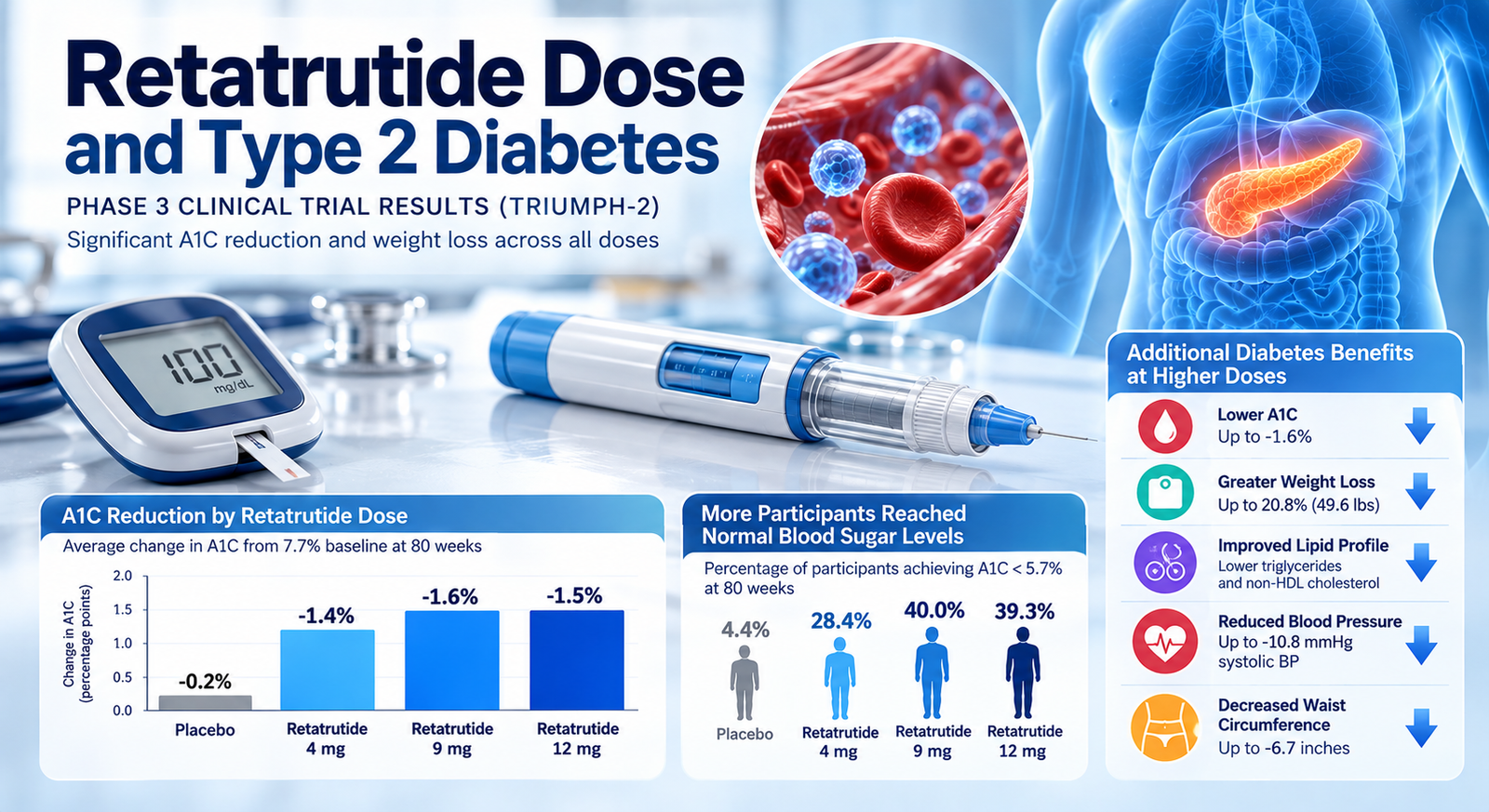
Retatrutide is being studied not only for weight reduction but also for its effects on glucose regulation.
Type 2 diabetes is a metabolic condition characterized by elevated blood glucose associated with insulin resistance and changes in insulin secretion.
Obesity and type 2 diabetes frequently occur together, and excess body weight can complicate diabetes management.
Treatments that influence both body weight and glucose regulation may therefore have significant clinical relevance.
How Does Retatrutide Affect A1C?
Hemoglobin A1C, commonly called HbA1c or A1C, reflects average blood glucose levels over approximately the previous two to three months.
It is widely used to monitor long-term glucose control in people with diabetes.
In TRIUMPH-2, participants receiving retatrutide experienced reductions in A1C from an average baseline of approximately 7.7%.
Retatrutide Dose and A1C Results
| Treatment Group | Average A1C Reduction | Participants Reaching A1C Below 5.7% |
|---|---|---|
| Retatrutide 4 mg | 1.4 percentage points | 28.4% |
| Retatrutide 9 mg | 1.6 percentage points | 40.0% |
| Retatrutide 12 mg | 1.5 percentage points | 39.3% |
| Placebo | 0.2 percentage points | 4.4% |
Source: Eli Lilly’s TRIUMPH-2 efficacy-estimand analysis.
These findings show that the highest retatrutide dose did not produce the greatest average A1C reduction in this analysis.
The 9 mg group showed a slightly larger numerical reduction than the 12 mg group.
That difference should not automatically be interpreted as proof that 9 mg is clinically superior for blood sugar control.
Why Are A1C Results Important?
A1C provides information about blood sugar control over time.
For people living with type 2 diabetes, improved glucose regulation may help reduce the risk of certain long-term complications when managed appropriately.
However, the interpretation of A1C results depends on individual health circumstances, concurrent medications, and the potential risks of treatment.
A lower A1C is not the only consideration in evaluating diabetes therapy.
Does Retatrutide Cure Type 2 Diabetes?
No evidence establishes retatrutide as a cure for type 2 diabetes.
The TRIUMPH-2 trial reported improvements in A1C, including some participants reaching values below the conventional threshold for diabetes.
However, achieving a normal-range A1C while receiving glucose-lowering treatment is not equivalent to demonstrating permanent diabetes remission.
Formal definitions of remission generally require sustained glycemic improvement without glucose-lowering medication for a specified period.
Further research is needed to understand the long-term metabolic effects of retatrutide.
Retatrutide Dose and Body Weight Reduction Milestones
Average weight loss provides useful information, but it does not describe how many participants achieved a particular level of weight reduction.
Clinical trials therefore frequently report responder outcomes, such as the proportion of participants losing at least 15%, 20%, or 25% of their initial body weight.
These outcomes help describe the distribution of treatment responses.
Weight Loss Milestones in TRIUMPH-2
| Weight Reduction | 4 mg | 9 mg | 12 mg | Placebo |
|---|---|---|---|---|
| At least 15% | 36.6% | 62.2% | 67.0% | 6.4% |
| At least 20% | 24.0% | 45.3% | 52.0% | 1.5% |
| At least 25% | 10.8% | 30.6% | 34.9% | 0.8% |
Source: TRIUMPH-2 efficacy-estimand results.
The proportion of participants achieving substantial weight reduction increased across the active-dose groups.
However, these figures represent outcomes observed in a controlled study population.
They should not be used as guarantees of weight loss for individual patients.
What Does Losing 20% of Body Weight Mean?
A 20% reduction represents one-fifth of a person’s starting body weight.
For example, a person weighing 250 pounds would have a 50-pound reduction if their body weight decreased by 20%.
This mathematical example is provided only to explain percentages.
It does not predict the response to any particular retatrutide dose.
Why Do Individual Results Vary?
Weight-management outcomes can vary because of many factors, including baseline weight, age, metabolic health, existing medical conditions, concurrent medications, lifestyle, treatment adherence, and individual biological differences.
Clinical trial averages combine outcomes from many participants.
Some people may experience greater changes, while others may have smaller responses or discontinue treatment.
Researchers use large randomized trials partly because individual responses cannot be reliably predicted from a small number of observations.
Retatrutide Dose and Side Effects
Safety is one of the most important considerations when evaluating any investigational drug.
Retatrutide’s activity at GLP-1, GIP, and glucagon receptors creates potential metabolic benefits, but it also requires careful assessment of adverse effects.
In TRIUMPH-2, the most frequently reported adverse events included diarrhea, nausea, constipation, vomiting, and reduced appetite.
Many gastrointestinal events were described as mild to moderate, but adverse effects can still interfere with daily activities or lead to treatment discontinuation.
Common Side Effects by Retatrutide Dose
| Side Effect | 4 mg | 9 mg | 12 mg | Placebo |
|---|---|---|---|---|
| Diarrhea | 27.4% | 33.5% | 33.6% | 13.2% |
| Nausea | 13.7% | 20.8% | 28.0% | 8.0% |
| Constipation | 14.0% | 16.2% | 16.8% | 9.4% |
| Vomiting | 5.5% | 10.2% | 15.7% | 4.2% |
| Decreased appetite | 5.8% | 12.3% | 17.1% | 4.5% |
Source: Eli Lilly’s September 2026 safety findings.
These data show that several gastrointestinal adverse events occurred more frequently at higher retatrutide target doses.
For example, nausea and vomiting were reported more often in the 12 mg group than in the 4 mg group.
Retatrutide Dose and Treatment Discontinuation
Some participants discontinued study treatment because of adverse events.
The reported discontinuation rates due to adverse events were:
| Group | Discontinuation Due to Adverse Events |
|---|---|
| Retatrutide 4 mg | 3.8% |
| Retatrutide 9 mg | 11.6% |
| Retatrutide 12 mg | 7.7% |
| Placebo | 4.9% |
Interestingly, the 9 mg group had a higher reported discontinuation rate than the 12 mg group.
This illustrates why safety outcomes should not be assumed to increase in a perfectly linear pattern with dose.
Differences may reflect participant characteristics, study circumstances, random variation, or other factors requiring detailed analysis.
What Other Safety Findings Were Reported?
TRIUMPH-2 also reported dysesthesia, a term describing unusual or unpleasant sensations, and urinary tract infections among certain participants.
The published study additionally reported hypotension more frequently in some retatrutide groups than in the placebo group.
Researchers must consider these findings alongside gastrointestinal events, changes in vital signs, laboratory measurements, and other safety outcomes.
Long-term studies are important because some adverse effects may be uncommon, delayed, or difficult to identify in smaller trials.
Why Is Safety Monitoring Important?
Clinical trials use structured monitoring procedures to identify potential treatment-related problems.
These procedures may include physical examinations, laboratory testing, symptom assessments, adverse-event reporting, and review by independent oversight groups.
Monitoring is particularly important when evaluating an investigational treatment that affects multiple metabolic pathways.
The presence of encouraging efficacy results does not eliminate the need for comprehensive safety evaluation.
Retatrutide Dose in Phase 2 Versus Phase 3 Trials
Retatrutide has undergone different stages of clinical development.
Phase 2 trials generally help researchers explore efficacy, safety, and dose selection in a defined patient population.
Phase 3 trials are typically larger and are designed to provide more substantial evidence supporting potential regulatory applications.
How Did Early Retatrutide Research Inform Later Trials?
Earlier research investigated a range of retatrutide doses to understand how the drug affected body weight and tolerability.
These studies helped establish the rationale for further clinical investigation.
Researchers subsequently selected target-dose groups for larger Phase 3 trials.
The Phase 3 program evaluates whether earlier findings can be reproduced in larger and more diverse populations.
Why Can’t Phase 2 and Phase 3 Results Be Compared Directly?
Different clinical trials may involve different participant populations, follow-up durations, statistical methods, dose-escalation procedures, and treatment conditions.
For example, a study involving adults with obesity but without diabetes may produce different average weight-loss outcomes from a study involving participants with both obesity and type 2 diabetes.
Even when the same dose is used, results may differ because the populations are not identical.
Comparisons should therefore account for study design rather than relying only on headline percentages.
What Is the Importance of Randomized Controlled Trials?
Randomization helps reduce systematic differences between treatment groups.
Placebo control provides a reference against which researchers can assess treatment effects.
Double-blinding reduces the possibility that knowledge of treatment assignment influences participant behavior or outcome assessment.
Together, these methods strengthen the reliability of clinical evidence.
However, even well-designed trials have limitations, and their results may not apply equally to every population.
Retatrutide Dose and Cardiometabolic Health
Weight reduction is only one outcome of interest in retatrutide research.
Investigators are also evaluating changes in metabolic and cardiovascular risk markers.
These may include blood pressure, blood lipids, waist circumference, glucose control, and markers associated with inflammation.
Cardiometabolic Findings From TRIUMPH-2
In the September 2026 results, Eli Lilly reported the following average changes in selected markers at the highest retatrutide target dose:
| Measurement | Reported Average Change |
|---|---|
| Triglycerides | 39.5% reduction |
| Non-HDL cholesterol | 19.6% reduction |
| Systolic blood pressure | 10.8 mmHg reduction |
| Waist circumference | 6.7 inches reduction |
| High-sensitivity C-reactive protein | 58.3% reduction |
These measurements provide additional information about metabolic changes during treatment.
However, improvements in risk markers do not automatically establish that retatrutide prevents heart attacks, strokes, or cardiovascular death.
Those outcomes require appropriately designed clinical investigations.
Why Does Waist Circumference Matter?
Waist circumference is a useful indicator of central body fat distribution.
Excess abdominal fat is associated with several metabolic health risks, although risk depends on many additional factors.
Changes in waist circumference may provide information beyond total body weight.
Nevertheless, waist measurements should be interpreted together with broader clinical findings.
Can Retatrutide Improve Cardiovascular Health?
The reported improvements in several cardiovascular risk markers are encouraging.
However, they do not by themselves prove a reduction in major cardiovascular events.
Further evidence is required to determine whether retatrutide produces sustained improvements in clinical outcomes.
This distinction is important when discussing investigational medications in medical journalism.
Retatrutide Dose Versus Semaglutide and Tirzepatide
Readers frequently compare retatrutide with other medications used in obesity and diabetes treatment.
The three drugs have different mechanisms, clinical development histories, and regulatory statuses.
Comparison of Drug Mechanisms
| Medication | Hormone Receptors Targeted | General Description |
|---|---|---|
| Semaglutide | GLP-1 | Single-receptor agonist |
| Tirzepatide | GIP and GLP-1 | Dual-receptor agonist |
| Retatrutide | GIP, GLP-1, and glucagon | Investigational triple-receptor agonist |
The number of receptors targeted does not determine the appropriate dose.
Milligram amounts are not interchangeable across medications.
For example, a milligram amount of retatrutide cannot be assumed to have the same clinical effect as the same milligram amount of tirzepatide.
Is Retatrutide Stronger Than Tirzepatide?
Some retatrutide studies have reported substantial average weight reduction.
However, direct conclusions about superiority require appropriate comparative evidence.
Differences in trial populations, study duration, treatment protocols, and statistical methods can influence reported outcomes.
A higher percentage of weight loss in one study does not automatically mean a drug is superior to another medication studied under different conditions.
Can Retatrutide Replace Semaglutide or Tirzepatide?
Retatrutide is not currently an FDA-approved replacement for either medication.
Any future clinical role will depend on the results of ongoing research, regulatory decisions, approved indications, and a complete assessment of benefits and risks.
Patients receiving approved medications should not discontinue or replace treatment based on investigational trial results without consulting their healthcare professional.
Is There an FDA-Approved Retatrutide Dose in 2026?
As of October 8, 2026, there is no FDA-approved retatrutide dose for routine clinical use.
Retatrutide remains an investigational drug being evaluated through controlled clinical trials.
The doses reported in research publications are not official prescribing recommendations.
This is one of the most important facts for anyone searching online for retatrutide dosage information.
Why Hasn’t Retatrutide Received FDA Approval?
Drug approval requires extensive evaluation of efficacy, safety, manufacturing quality, labeling, and the proposed conditions of use.
A promising Phase 3 result is an important milestone, but it does not automatically result in regulatory approval.
Regulators must assess the complete evidence package and determine whether the drug’s benefits outweigh its risks for the proposed indication.
What Has the FDA Said About Unapproved Retatrutide Products?
The FDA has warned about unapproved GLP-1-related products being marketed for weight loss.
The agency has specifically stated that retatrutide cannot be used in compounding under federal law and is not a component of an FDA-approved drug.
The FDA has also taken enforcement action against businesses marketing unapproved retatrutide products.
Products advertised online as retatrutide may not have undergone appropriate regulatory review for quality, safety, or effectiveness.
What About Retatrutide Sold as a Research Peptide?
Products labeled “research use only” should not be assumed suitable for human administration.
Such labels do not establish that a product has been manufactured, tested, or approved to pharmaceutical standards.
Potential concerns include uncertain identity, contamination, incorrect concentration, sterility problems, and inaccurate labeling.
A published clinical trial protocol does not make an unapproved product safe for self-administration.
How Do Researchers Determine the Appropriate Retatrutide Dose?
Dose selection is a central part of pharmaceutical development.
Researchers must evaluate how a drug behaves in the body, how strongly it affects biological targets, and how those effects change as the administered amount increases.
Pharmacokinetics and Retatrutide Dose
Pharmacokinetics describes how the body absorbs, distributes, metabolizes, and eliminates a drug.
These processes influence how much drug is present in the body over time.
For a medication being investigated for once-weekly administration, researchers need to understand whether drug exposure remains within the intended range throughout the dosing interval.
They also evaluate whether repeated administration causes accumulation and whether certain patient characteristics influence exposure.
Pharmacodynamics and Retatrutide Dose
Pharmacodynamics describes how a drug affects the body.
For retatrutide, relevant pharmacodynamic outcomes include changes in appetite-related pathways, body weight, glucose regulation, and other metabolic measurements.
Researchers evaluate whether increasing exposure produces additional benefit and whether those changes are accompanied by greater adverse effects.
What Is the Therapeutic Window?
The therapeutic window refers to the range of drug exposure associated with desired effects while avoiding unacceptable toxicity.
In drug development, the objective is not simply to identify the largest dose participants can tolerate.
Instead, researchers seek an appropriate balance between effectiveness and safety.
For retatrutide, this balance remains part of the investigational and regulatory evaluation.
Why Is the Highest Dose Not Always the Best Dose?
A higher dose may increase efficacy for some outcomes while also increasing the frequency or severity of adverse events.
The TRIUMPH-2 results illustrate this complexity.
The 12 mg group showed the greatest average weight reduction in the reported efficacy analysis, but the 9 mg group had a slightly greater numerical A1C reduction.
The safety findings also varied between groups.
These observations demonstrate why dose selection must consider multiple outcomes.
Retatrutide Dose and Long-Term Weight Management
Long-term weight management involves more than the initial amount of weight lost during treatment.
Researchers must also understand whether benefits persist, how outcomes change after treatment discontinuation, and what happens when participants remain on therapy for extended periods.
What Happens After Retatrutide Treatment Stops?
Long-term outcomes after stopping retatrutide are still being investigated.
Weight regain after discontinuing some other incretin-based obesity treatments has been documented, but the extent and timing of weight regain following retatrutide should not be assumed to be identical.
Dedicated follow-up evidence is needed.
The TRIUMPH-2 protocol included a four-week post-treatment follow-up period, which does not establish long-term weight maintenance after discontinuation.
Will Retatrutide Require Long-Term Treatment?
It is not yet established how retatrutide would be used in routine practice if it receives regulatory approval.
The duration of therapy would depend on evidence regarding sustained benefit, safety, treatment discontinuation, and the eventual approved labeling.
Chronic weight management often requires ongoing clinical attention, but no approved long-term retatrutide regimen currently exists.
Can Lifestyle Changes Influence Clinical Outcomes?
Nutrition, physical activity, sleep, and other lifestyle factors can influence body weight and metabolic health.
Clinical trial outcomes may reflect the combined effects of investigational medication, study procedures, and accompanying lifestyle interventions.
Therefore, observed results should not be interpreted as the effects of dose alone in isolation from the trial environment.
Lifestyle recommendations should be individualized according to a person’s health needs and medical circumstances.
Retatrutide Dose Research: What Comes Next?
The retatrutide clinical development program continues to investigate efficacy and safety across several populations.
Researchers are examining outcomes related to obesity, type 2 diabetes, and other weight-associated medical conditions.
The results of these studies will help determine the potential role of retatrutide in future clinical care.
Why Are Additional Phase 3 Studies Necessary?
Different patient populations may respond differently to treatment.
A medication that produces substantial weight loss in adults with obesity and type 2 diabetes may have a different benefit-risk profile in people with severe obesity, cardiovascular disease, or other medical conditions.
Additional trials can help researchers understand these differences.
They may also provide information about less common adverse effects and the consistency of treatment outcomes.
Could Future Research Change Retatrutide Dose Selection?
Yes.
As additional evidence becomes available, researchers and regulators may refine their understanding of the relationship between dose, effectiveness, and tolerability.
Future findings could influence the doses included in a regulatory application or the conditions under which the medication might be used if approved.
However, the final approved dosing instructions, if any, cannot be established from current trial results alone.
What Should Readers Watch for in Future Updates?
Important developments include additional peer-reviewed publications, detailed safety analyses, regulatory submissions, and FDA decisions.
Readers should distinguish company announcements from peer-reviewed findings and regulatory approvals.
Company press releases can provide useful early information, but comprehensive clinical evaluation requires review of the underlying evidence.
Frequently Asked Questions About Retatrutide Dose
What is the retatrutide dose used in clinical trials?
Clinical studies have investigated several retatrutide doses. In the TRIUMPH-2 Phase 3 trial, the target-dose groups were 4 mg, 9 mg, and 12 mg, with participants receiving once-weekly investigational treatment under a controlled research protocol.
What is the retatrutide starting dose?
In TRIUMPH-2, participants assigned to active treatment began at 2 mg once weekly under the study protocol. This is a historical research detail, not an FDA-approved starting dose or recommendation for personal use.
Is 2 mg a maintenance retatrutide dose?
In the TRIUMPH-2 study, 2 mg was used as an initial dose rather than one of the three primary target-dose groups. Other research protocols may differ.
What is the highest retatrutide dose studied in TRIUMPH-2?
The highest target dose evaluated in TRIUMPH-2 was 12 mg.
How much weight was lost with retatrutide 4 mg?
The 4 mg group achieved an average weight reduction of 12.7% over 80 weeks in Eli Lilly’s reported efficacy-estimand analysis.
How much weight was lost with retatrutide 9 mg?
The 9 mg group achieved an average weight reduction of 19.1% over 80 weeks in the same analysis.
How much weight was lost with retatrutide 12 mg?
The 12 mg group achieved an average weight reduction of 20.8% over 80 weeks in the reported efficacy analysis.
Does retatrutide 12 mg work better than 9 mg?
The 12 mg group showed greater average weight reduction in TRIUMPH-2. However, the 9 mg group had a slightly greater numerical A1C reduction, and safety outcomes differed. The overall comparison requires more than one outcome measure.
How often was retatrutide administered in TRIUMPH-2?
Retatrutide was administered once weekly as an investigational subcutaneous injection according to the clinical trial protocol.
How long did the TRIUMPH-2 study last?
The main treatment evaluation extended to 80 weeks, with an additional four-week post-treatment follow-up period.
Is there a retatrutide dose for weight loss approved by the FDA?
No. As of October 2026, retatrutide has not received FDA approval for weight loss or any other indication.
Is there a retatrutide dose approved for type 2 diabetes?
No. Retatrutide remains investigational for type 2 diabetes and other potential indications.
Does a higher retatrutide dose cause more side effects?
Several gastrointestinal side effects were more common in higher-dose groups in TRIUMPH-2. However, not every adverse event followed a strictly increasing dose pattern.
Can retatrutide cause nausea?
Yes. Nausea was among the commonly reported adverse events in clinical research, with rates varying by treatment group.
Can retatrutide cause vomiting or diarrhea?
Yes. Both vomiting and diarrhea were reported in TRIUMPH-2, and their frequency differed across dose groups.
Does retatrutide lower A1C?
In TRIUMPH-2, retatrutide treatment was associated with average A1C reductions of approximately 1.4 to 1.6 percentage points across the active-dose groups in the company’s reported efficacy analysis.
Is retatrutide the same as tirzepatide?
No. Tirzepatide activates GIP and GLP-1 receptors, while retatrutide activates GIP, GLP-1, and glucagon receptors.
Can retatrutide and tirzepatide doses be compared milligram for milligram?
No. The drugs have different molecular structures and pharmacological properties. Equal milligram amounts should not be assumed to produce equivalent effects.
Can someone buy retatrutide online?
Products marketed online as retatrutide may be unapproved and may pose safety and quality risks. The FDA has warned about unapproved retatrutide products and their use in compounding.
Is compounded retatrutide FDA-approved?
No. The FDA states that retatrutide cannot be used in compounding under federal law and is not a component of an FDA-approved drug.
Can retatrutide be used without medical supervision?
Retatrutide is investigational, and published trial protocols do not establish safe instructions for unsupervised use. Clinical trial participants receive treatment under formal research oversight.
When might retatrutide receive FDA approval?
A specific approval date cannot be guaranteed. Future regulatory decisions depend on clinical evidence, submission review, and the FDA’s assessment of benefits and risks.
Conclusion: Understanding Retatrutide Dose Research in 2026
Retatrutide dose research represents an important area of investigation in obesity and metabolic medicine.
Eli Lilly’s TRIUMPH-2 Phase 3 study reported substantial average weight reduction across the 4 mg, 9 mg, and 12 mg target-dose groups, alongside improvements in A1C among adults with type 2 diabetes and obesity or overweight.
The 12 mg group achieved the greatest average weight reduction in the company’s reported efficacy analysis, while the 9 mg group showed the largest numerical average A1C reduction.
These findings highlight the importance of evaluating multiple clinical outcomes rather than assuming that the highest dose is always the most appropriate.
Safety findings also deserve careful attention. Gastrointestinal adverse events were common, and treatment discontinuation occurred in some participants.
Most importantly, there is currently no FDA-approved retatrutide dose. The dosing information available in research publications describes investigational protocols and should not be used as personal treatment instructions.
As additional Phase 3 evidence becomes available, researchers and regulators will gain a clearer understanding of retatrutide’s potential clinical role, safety profile, and appropriate dosing if the drug is eventually approved.
For readers following emerging weight-management treatments, the most reliable approach is to consult peer-reviewed clinical research, official trial records, regulatory announcements, and qualified healthcare professionals.
Medical Disclaimer: This article is intended for educational and informational purposes only. Retatrutide is an investigational drug and is not FDA-approved for human treatment. The clinical trial doses discussed here are not medical recommendations, prescribing instructions, or guidance for self-administration. Do not obtain or use unapproved retatrutide products based on this article. Consult a qualified healthcare professional about approved treatments for obesity or type 2 diabetes.
Editorial note: Clinical trial results, regulatory status, and medical guidance may change as new evidence becomes available. This article reflects information available as of October 8, 2026.



Leave a Reply