


Probiotics: What Your Gut Really Needs to Know. You’ve probably seen probiotics everywhere… yogurt, capsules, powders, and drinks promising a “healthier gut.” But what exactly are probiotics, and do they really work?
Probiotics are live microorganisms that, when consumed in adequate amounts, provide a health benefit. They include certain bacteria and yeasts, with commonly studied groups including Lactobacillus-related bacteria, Bifidobacterium, and Saccharomyces.
The important thing to understand is that probiotics are not all the same. Different probiotic strains can have different effects, and the product that may help one digestive problem may not be useful for another.
How Probiotics Affect Gut Health

Your digestive tract is home to trillions of microorganisms that interact with each other and with your body.
How Do Probiotics Affect the Gut?
Probiotics may affect gut health in several ways. Depending on the microorganism and strain, they may help support the intestinal barrier, compete with potentially harmful microorganisms, influence the gut environment, and produce substances that interact with intestinal cells.
However, probiotics should not be viewed as a simple way to “replace” your gut bacteria. Their effects can be temporary and depend on the particular strain, dose, diet, and individual.
One Probiotic Does Not Fit Everyone
A common mistake is assuming that all probiotics work in the same way.
Probiotics are identified by genus, species, and strain. For example, Lacticaseibacillus rhamnosus GG refers to a particular strain. It is more specific than simply saying “Lactobacillus.”
This distinction matters because research on one strain cannot automatically be applied to another strain of the same species.
Probiotic Strain vs Species: What’s the Difference?

Understanding probiotic strain vs species can make probiotic labels much easier to interpret.
The basic naming structure is:
Genus → Species → Strain
For example:
Lacticaseibacillus → rhamnosus → GG
The genus and species identify the microorganism, while the strain identifies a particular genetic lineage within that species.
Different strains can have different characteristics and may have been studied for different health conditions.
That is why looking only for a product containing a particular species may not be enough. When possible, look for the specific strain used in clinical research for your particular goal.
What Does Probiotic CFU Mean?

You may see numbers such as 5 billion, 10 billion, or 50 billion on probiotic supplements.
CFU Meaning in Probiotics
CFU stands for colony-forming units. It is commonly used to describe the number of viable microorganisms in a probiotic product.
But a higher CFU number does not automatically mean a probiotic is better.
A product containing 50 billion CFUs is not necessarily more effective than one containing 5 billion CFUs. The appropriate amount depends on the specific microorganism, strain, formulation, and health condition being studied.
For this reason, probiotic dose and strain should be considered together rather than focusing only on the largest CFU number on the bottle.
Probiotic Dose and Strain: Why Both Matter
When choosing a probiotic, the question isn’t simply, “How many billion CFUs does it contain?”
A better question is:
Which strain is it, and what dose of that strain has actually been studied for the goal I have?
Clinical studies may use specific strains at specific doses. Taking a different strain at a much higher dose does not necessarily produce the same result.
This is particularly important when looking at probiotics for digestive conditions such as IBS or diarrhea.
Probiotic Strains for IBS Symptoms
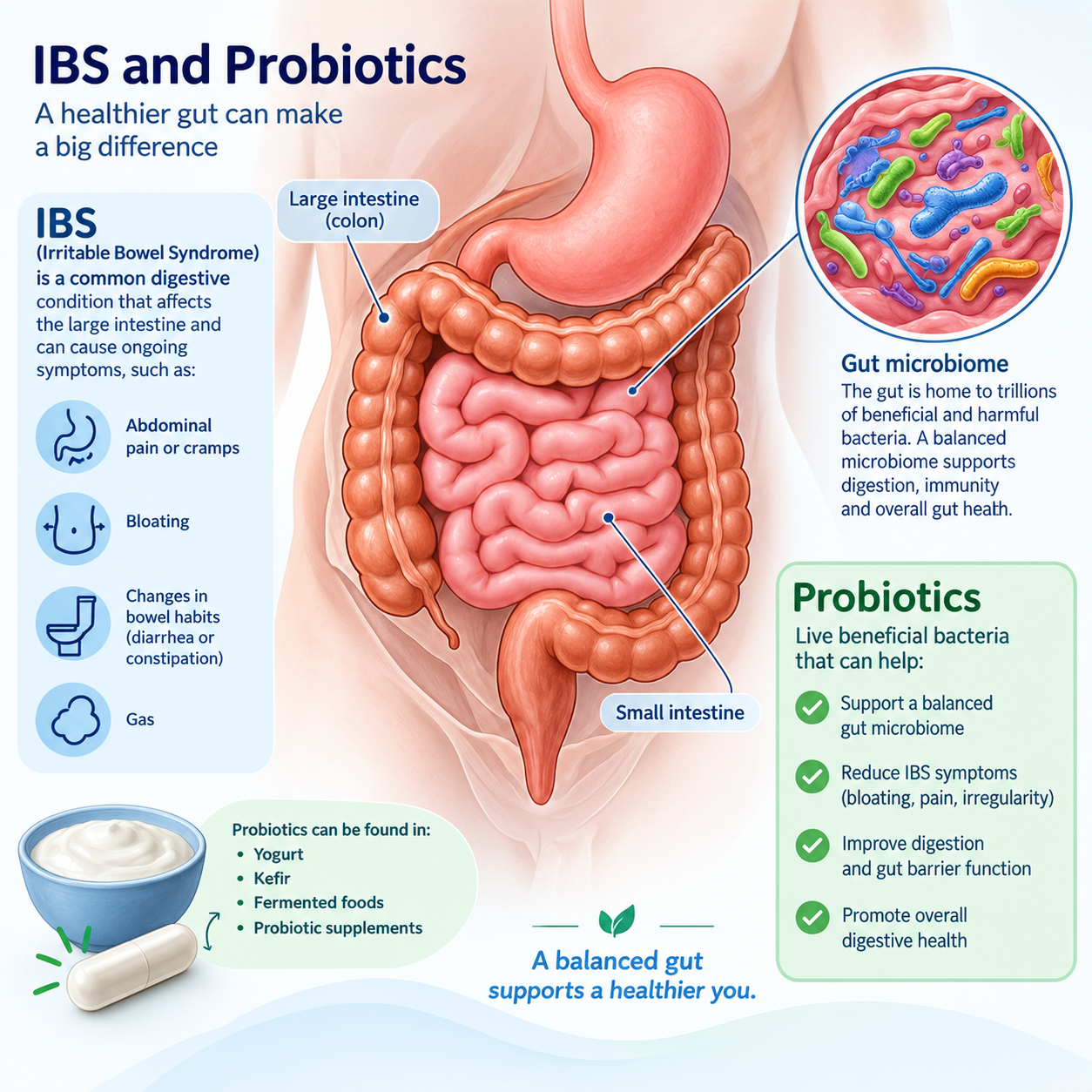
Irritable bowel syndrome, or IBS, can involve abdominal pain, bloating, changes in bowel habits, diarrhea, constipation, or a combination of symptoms.
Research has investigated various probiotic strains for IBS symptoms, but results have been inconsistent.
Do Probiotics Help IBS?
Some probiotic products and strains have shown potential for improving certain IBS symptoms in clinical studies. However, benefits can vary between individuals and between products.
There is no single probiotic that has been proven to work for every person with IBS.
If you’re considering a probiotic for IBS, look for evidence involving the specific strain and dose, rather than choosing a product simply because it contains a large number of microorganisms.
Antibiotic-Associated Diarrhea and Probiotics
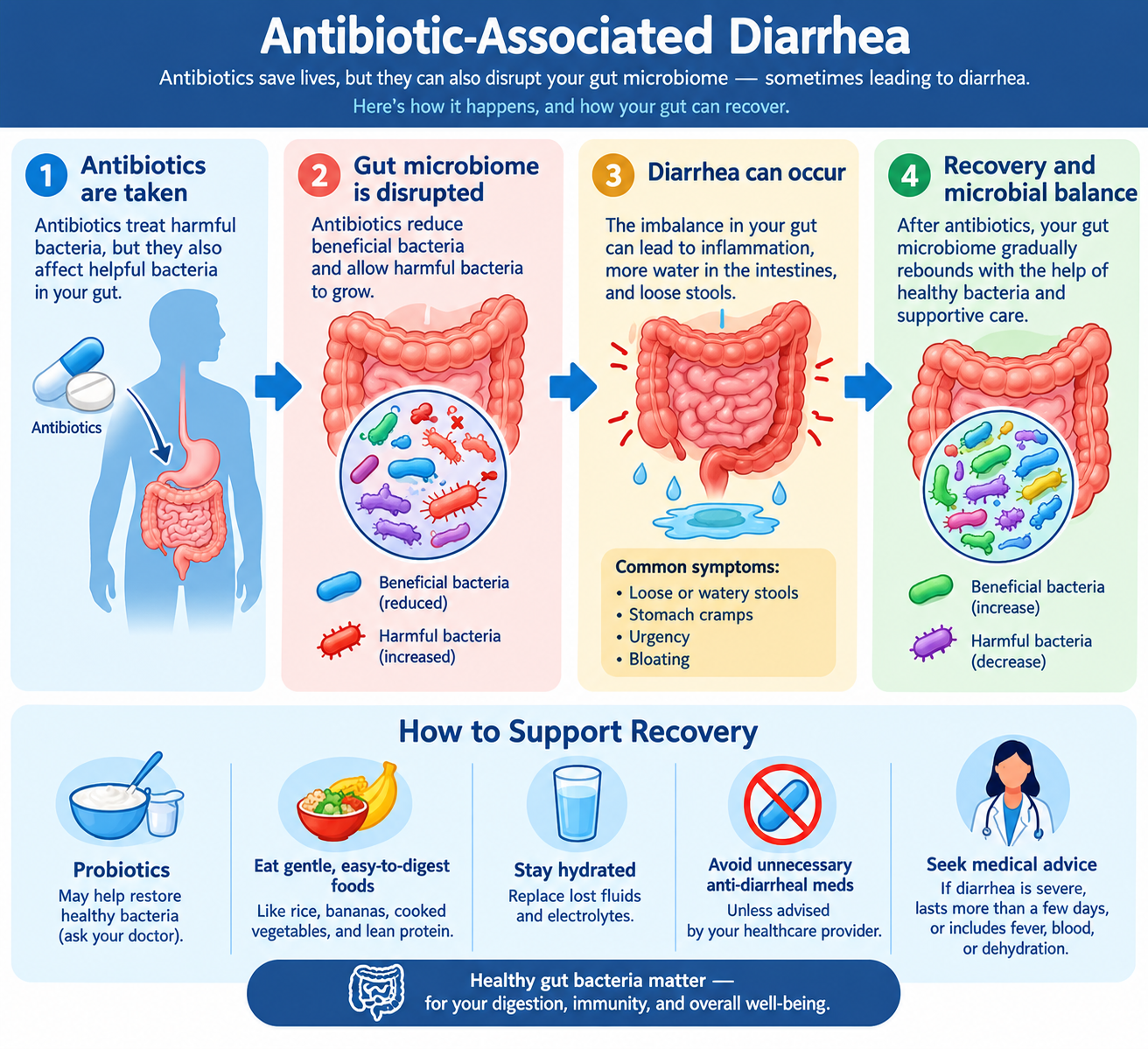
Antibiotics can affect microorganisms in the digestive tract. In some people, this can be followed by diarrhea.
How Long Does Antibiotic-Associated Diarrhea Last?
Mild antibiotic-associated diarrhea often improves after the antibiotic course ends, but the duration can vary depending on the person, antibiotic, and underlying cause.
Diarrhea that is severe, persistent, bloody, accompanied by significant abdominal pain or fever, or occurs after antibiotic use should be discussed with a healthcare professional. Antibiotic use can sometimes be associated with infections such as Clostridioides difficile, which require medical evaluation.
Can Probiotics Help With Antibiotic-Associated Diarrhea?
Certain probiotic strains have been studied for antibiotic-associated diarrhea. Some research suggests that particular strains may reduce the risk in certain populations.
However, this does not mean every probiotic supplement will have the same effect.
The strain, dose, timing, patient population, and antibiotic involved can all matter.
How to Choose a Probiotic Supplement
Walking into a store or searching online can leave you with dozens of probiotic products to choose from.
Instead of focusing only on marketing claims, consider several details.
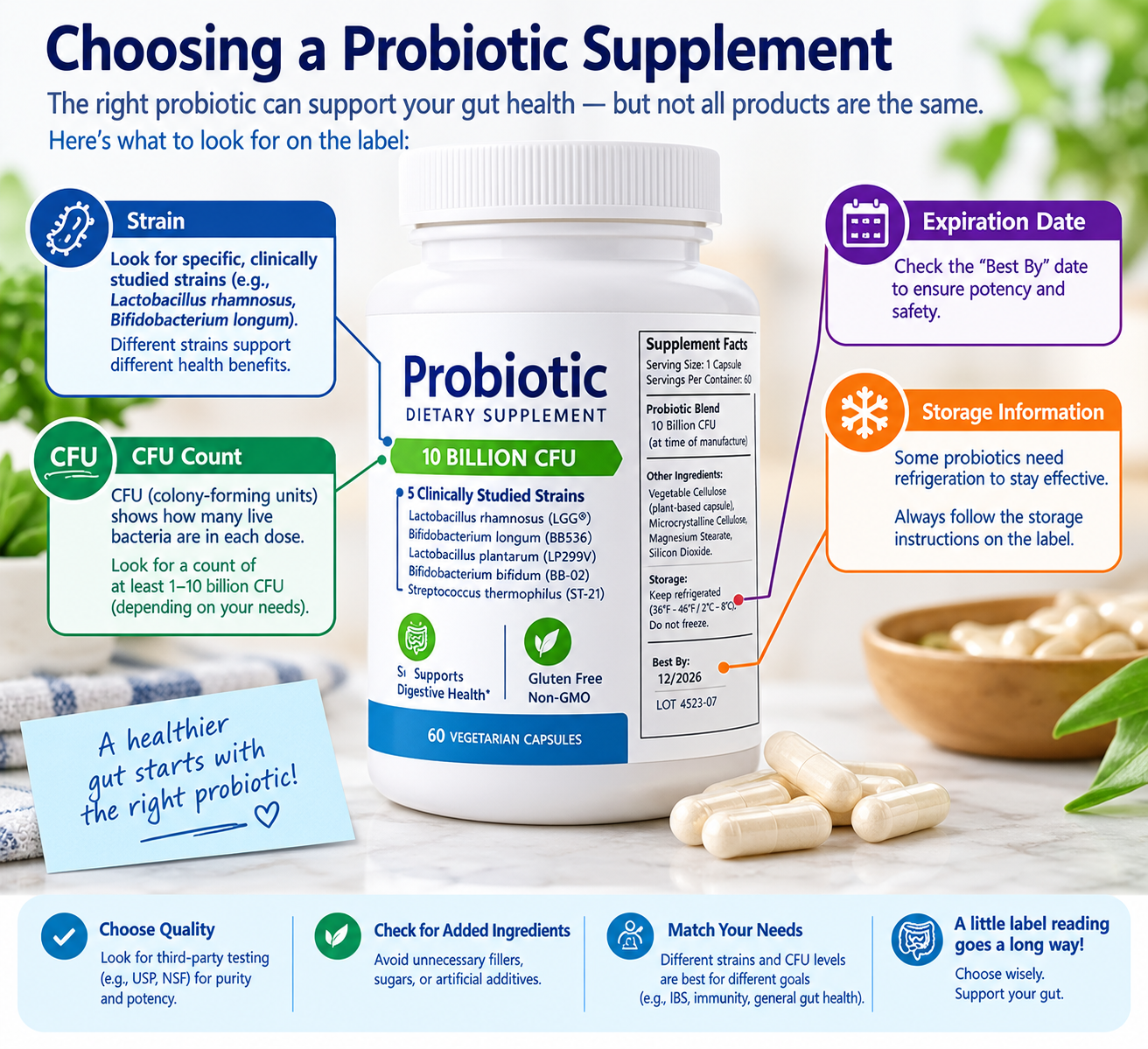
1. Check the Specific Strain
Look for the complete microorganism name, including the strain designation when available.
A label that simply says “proprietary probiotic blend” provides less information than one that clearly identifies the microorganisms and strains.
2. Check the CFU Amount
Look at the number of CFUs and determine whether the amount is consistent with the evidence for your intended use.
More isn’t automatically better.
3. Consider the Intended Goal
Are you looking for a probiotic related to IBS symptoms? Antibiotic-associated diarrhea? General dietary supplementation?
Different goals may have different evidence.
4. Check Storage Requirements
Some probiotic products require refrigeration, while others are formulated to remain stable at room temperature.
Follow the manufacturer’s storage instructions to help maintain product quality.
5. Check the Expiration Date
Look at the expiration information and, where provided, whether the stated CFU amount is guaranteed through the expiration date.
Fermented Foods vs Probiotic Supplements

You don’t necessarily need a probiotic supplement to include fermented foods in your diet.
Foods such as yogurt and certain other fermented foods can contain microorganisms. However, fermented foods vs probiotic supplements are not necessarily interchangeable.
Do Fermented Foods Contain Probiotics?
Not every fermented food contains a microorganism that meets the scientific definition of a probiotic with a demonstrated health benefit.
Some fermented foods may contain live microorganisms, while others may have microorganisms that are removed or reduced during processing.
A food can therefore be fermented without necessarily providing a clinically studied probiotic strain.
What’s the Difference Between Probiotics and Prebiotics?

The terms probiotic and prebiotic are often used together, but they describe different things.
Probiotics
Probiotics are live microorganisms that provide a health benefit when consumed in adequate amounts.
Prebiotics
Prebiotics are substances, often specific types of dietary fiber or other substrates, that are selectively utilized by microorganisms in the body and provide a health benefit.
In simple terms, probiotics involve specific live microorganisms, while prebiotics are substances that can be utilized by microorganisms.
They are related concepts, but they are not the same thing.
What Does the Evidence Actually Show?
Research suggests that certain probiotics may provide benefits for specific health conditions.
Studies have investigated probiotics for IBS symptoms, antibiotic-associated diarrhea, infectious diarrhea, and other gastrointestinal concerns. However, results can vary considerably between strains, doses, products, and patient populations.
This is why researchers and clinical organizations emphasize strain-specific evidence rather than assuming that every probiotic works in the same way.
A supplement with a high CFU count may sound impressive, but the number alone does not tell you whether it has been studied for the health concern you’re trying to address.
The Bottom Line: Think Strain, Not Just CFU
Probiotics are more complicated than a number on a supplement bottle.
When evaluating a probiotic, consider:
- The specific strain
- The dose and CFU amount
- The health goal
- Evidence from clinical studies
- Storage requirements
- Expiration information
- Your individual circumstances
The evidence is promising for certain strains and conditions, but it does not support the idea that every probiotic supplement will improve everyone’s health.
Your gut is personal. If a probiotic is appropriate for you, choosing one based on the specific strain, dose, and evidence is more useful than simply choosing the product with the biggest CFU number.
This article is for educational purposes only and is not medical advice. People with serious illnesses, weakened immune systems, or other significant medical conditions should discuss probiotic use with a qualified healthcare professional.
References
- NIH Office of Dietary Supplements, Probiotics Fact Sheet for Health Professionals
- World Gastroenterology Organisation, Global Guideline: Probiotics and Prebiotics (2023)
Read more health related articles





Leave a Reply