

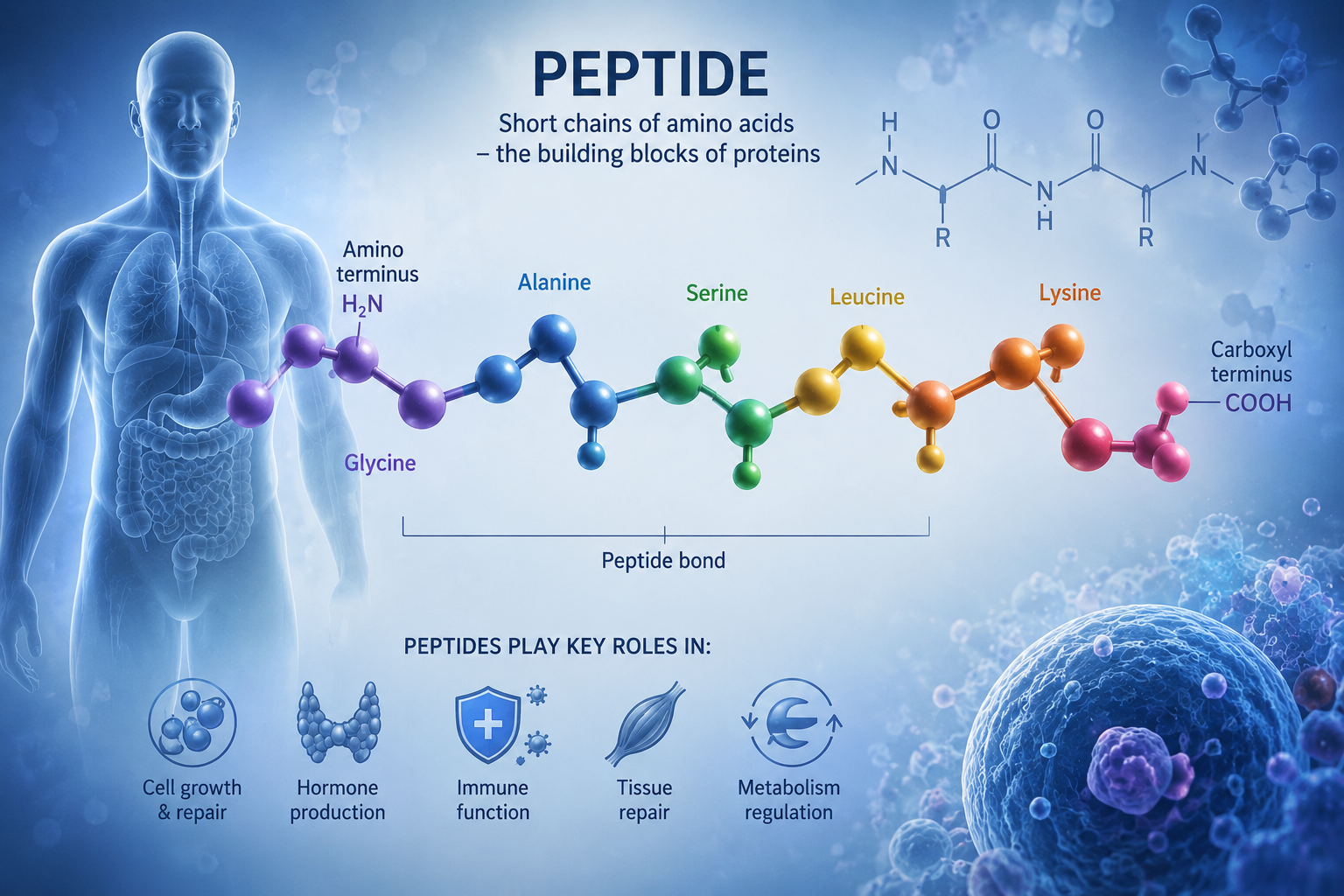
Peptides have become one of the most talked‑about topics in health, wellness, and anti‑aging communities. You may see them mentioned in skincare products, fitness supplements, or even medical treatments. But what exactly are peptides—and what does science really say about them?
Let’s break it down in a simple, evidence‑based way.
 What Are Peptides?

Peptides are short chains of amino acids, the same building blocks that make up proteins. Think of them as “mini‑proteins” that act as messengers in the body. They help regulate many biological processes, including:
- Cell growth
- Hormone production
- Immune function
- Tissue repair
- Metabolism
Because peptides play so many roles, scientists have developed peptide‑based medications to treat a wide range of health conditions.
 What Are Peptides Used For?
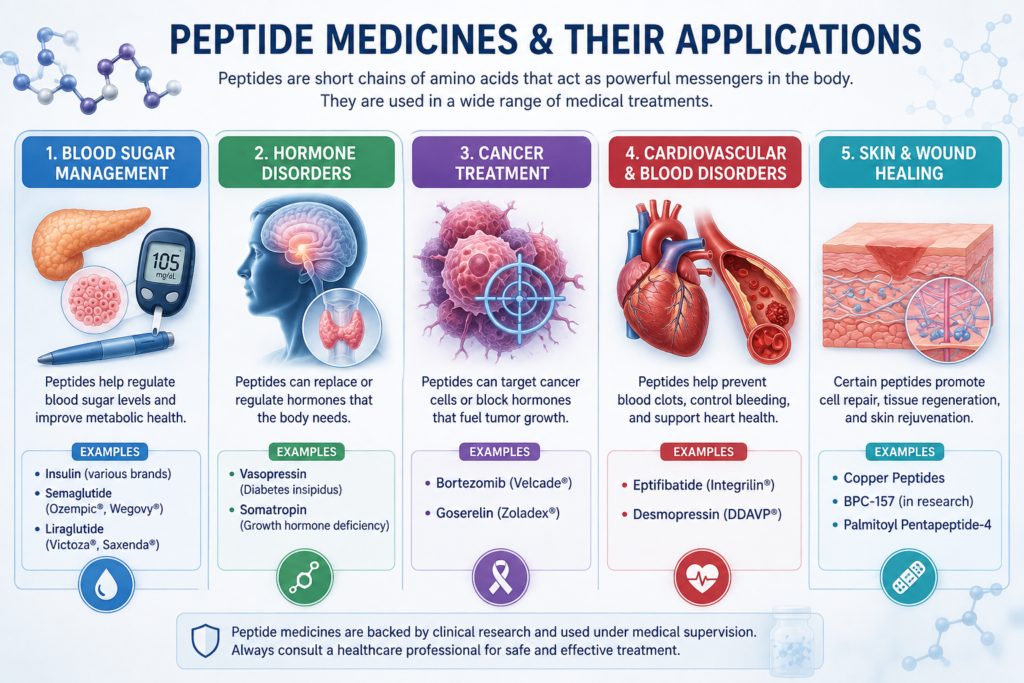
Peptides have legitimate medical uses, supported by clinical research. Some of the most common FDA‑approved peptide medications include:
1. Diabetes Management
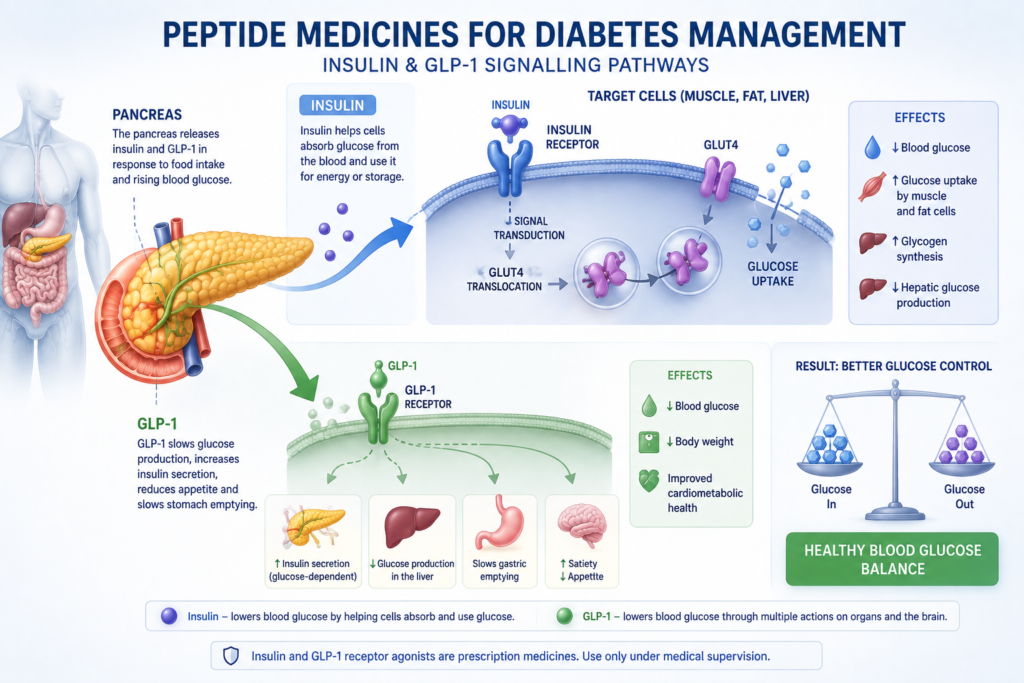
- Insulin (various brands)
- GLP‑1 receptor agonists like semaglutide (Ozempic, Wegovy) and liraglutide (Victoza, Saxenda)
These peptides help regulate blood sugar and improve metabolic health.
2. Hormone Disorders
- Vasopressin (for diabetes insipidus)
- Somatropin (growth hormone deficiency)
3. Cancer Treatment
- Bortezomib (Velcade)
- Goserelin (Zoladex)
These peptides help control tumor growth or hormone‑related cancers.
4. Cardiovascular & Blood Disorders
- Eptifibatide (Integrilin)
- Desmopressin (DDAVP)
Used for clotting disorders and heart procedures.
5. Skin & Wound Healing
Some peptides are used in dermatology for wound repair or cosmetic procedures.
 How Many Peptides Are FDA‑Approved?
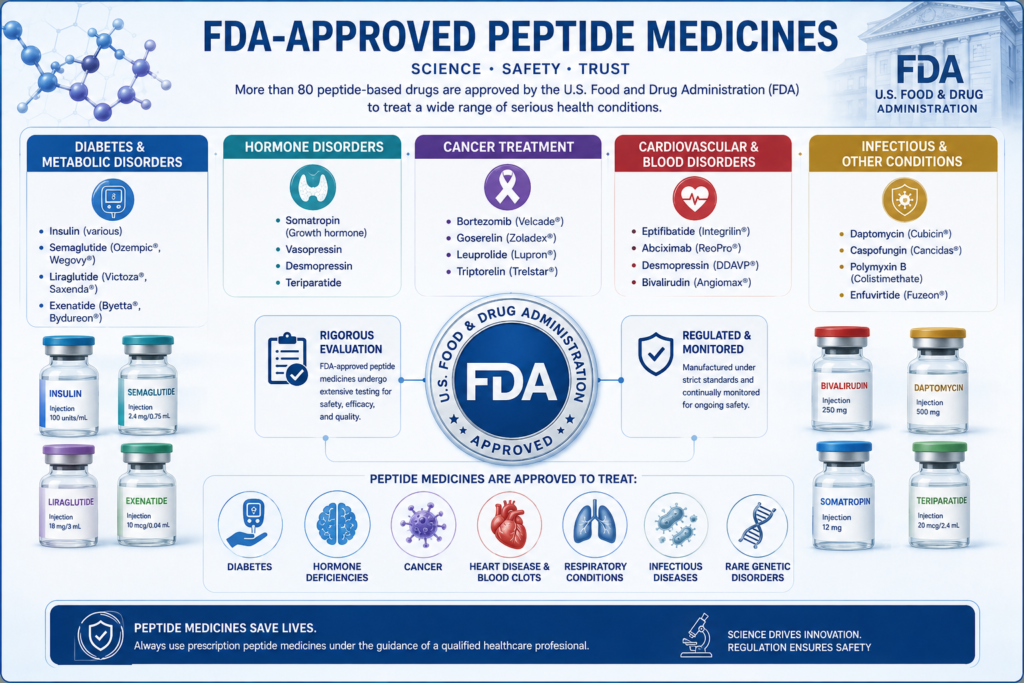
As of today, more than 80 peptide‑based drugs have been approved by the U.S. Food and Drug Administration (FDA). These include medications for:
- Diabetes
- Cancer
- Hormone disorders
- Heart disease
- Infectious diseases
- Genetic conditions
This number continues to grow as peptide research expands.
 What About “Peptide Supplements” Sold Online?
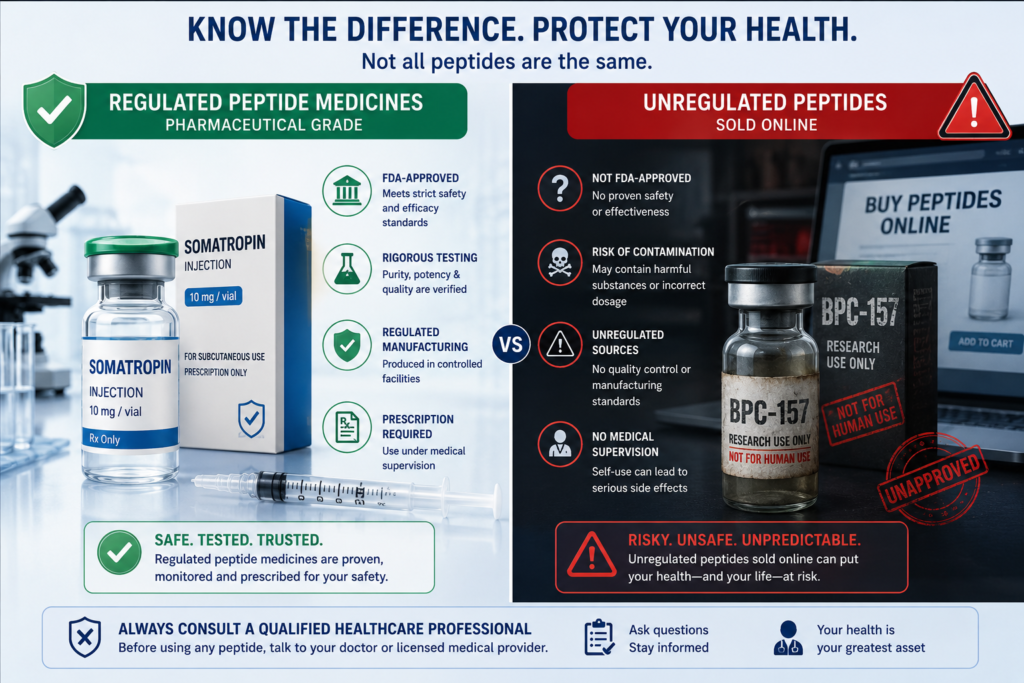
Many peptides marketed online for:
- Anti‑aging
- Muscle building
- Fat loss
- Sexual enhancement
- “Biohacking”
are NOT FDA‑approved, NOT regulated, and often NOT tested for safety.
Some risks include:
- Contamination
- Incorrect dosing
- Unknown long‑term effects
- Hormonal imbalance
- Organ damage
- Dangerous interactions with medications
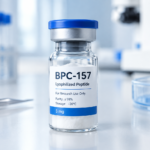
Even peptides that sound legitimate—like BPC‑157, TB‑500, or CJC‑1295—are not approved for human use outside of research settings.
 Important Safety Warning
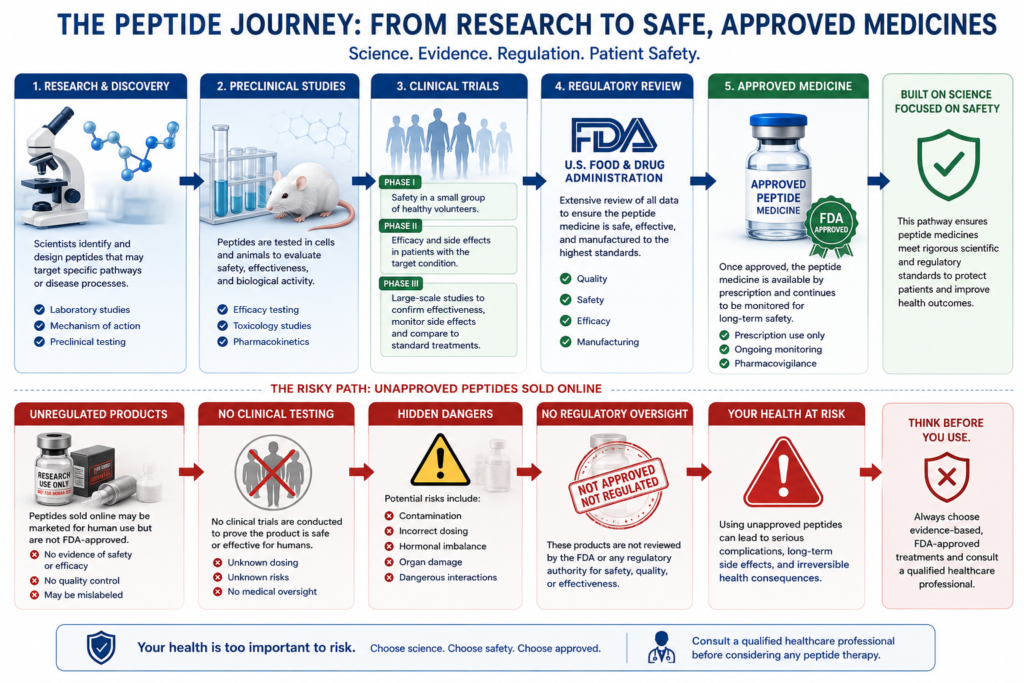
Peptides can affect hormones, metabolism, and immune function. Because of this, they should never be used without guidance from a licensed healthcare professional.
Before using any peptide:
- Speak with a doctor, pharmacist, or qualified medical provider
- Avoid purchasing peptides from unregulated online sources
- Do not self‑inject or self‑dose
- Be cautious of marketing claims that sound “too good to be true”
Your health and safety should always come first.
 Summary for Readers
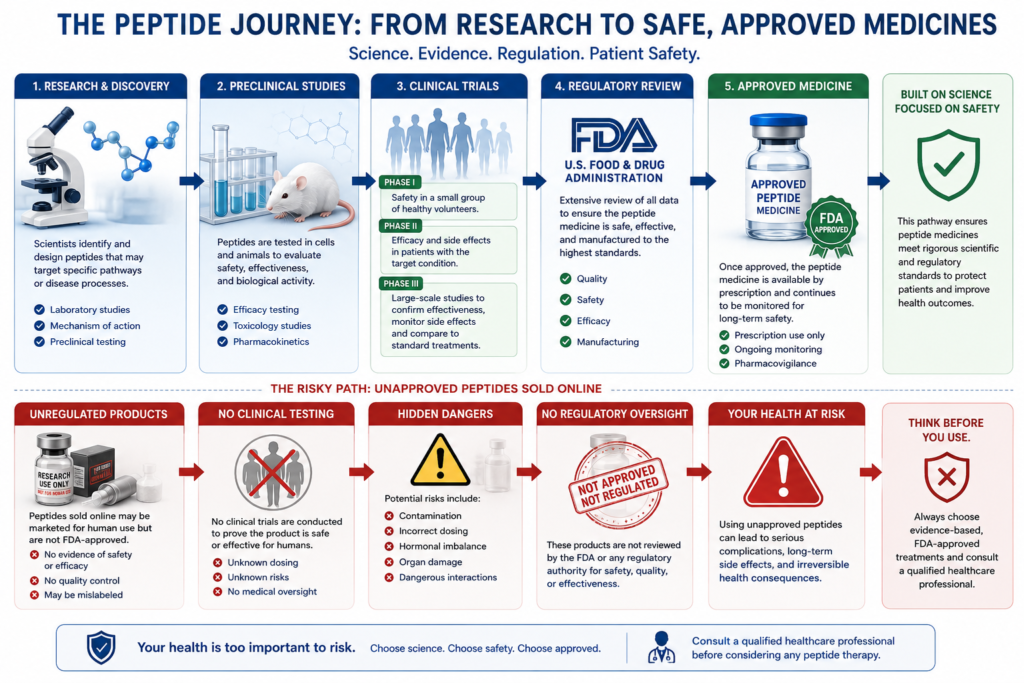
Peptides are powerful biological molecules with many important medical uses. More than 80 peptide‑based drugs are FDA‑approved, and they help treat conditions ranging from diabetes to cancer. However, many peptides sold online for cosmetic or fitness purposes are not approved, not regulated, and may be unsafe.
If you’re curious about peptides for health or wellness, always consult a qualified healthcare professional before trying anything.
 References & Evidence Sources
FDA‑Approved Peptide Drugs
- U.S. Food and Drug Administration (FDA) – Drugs@FDA Database
https://www.accessdata.fda.gov/scripts/cder/daf/(accessdata.fda.gov in Bing)
Clinical Trials & Research
- ClinicalTrials.gov – Peptide‑related clinical studies https://clinicaltrials.gov/
Peer‑Reviewed Reviews
- Fosgerau K, Hoffmann T. Peptide therapeutics: current status and future directions. Drug Discovery Today.
- Lau JL, Dunn MK. Therapeutic peptides: Historical perspectives, current development trends, and future directions. Bioorganic & Medicinal Chemistry.
Safety & Regulatory Information
- FDA Consumer Updates – Unapproved peptide products https://www.fda.gov/consumers
Disclaimer
This article is intended for general educational and informational purposes only. It is not medical advice and should not be used as a substitute for guidance from a qualified healthcare professional. The information presented is a general summary of currently available evidence and is not intended to establish clinical recommendations or treatment decisions. This article should not be quoted, cited, or used as an authoritative source in clinical studies, scientific publications, medical journals, regulatory submissions, or other scholarly work. Readers should refer to the original peer‑reviewed studies, clinical guidelines, regulatory documents, and other primary sources when using evidence for clinical, academic, or research purposes



Leave a Reply