

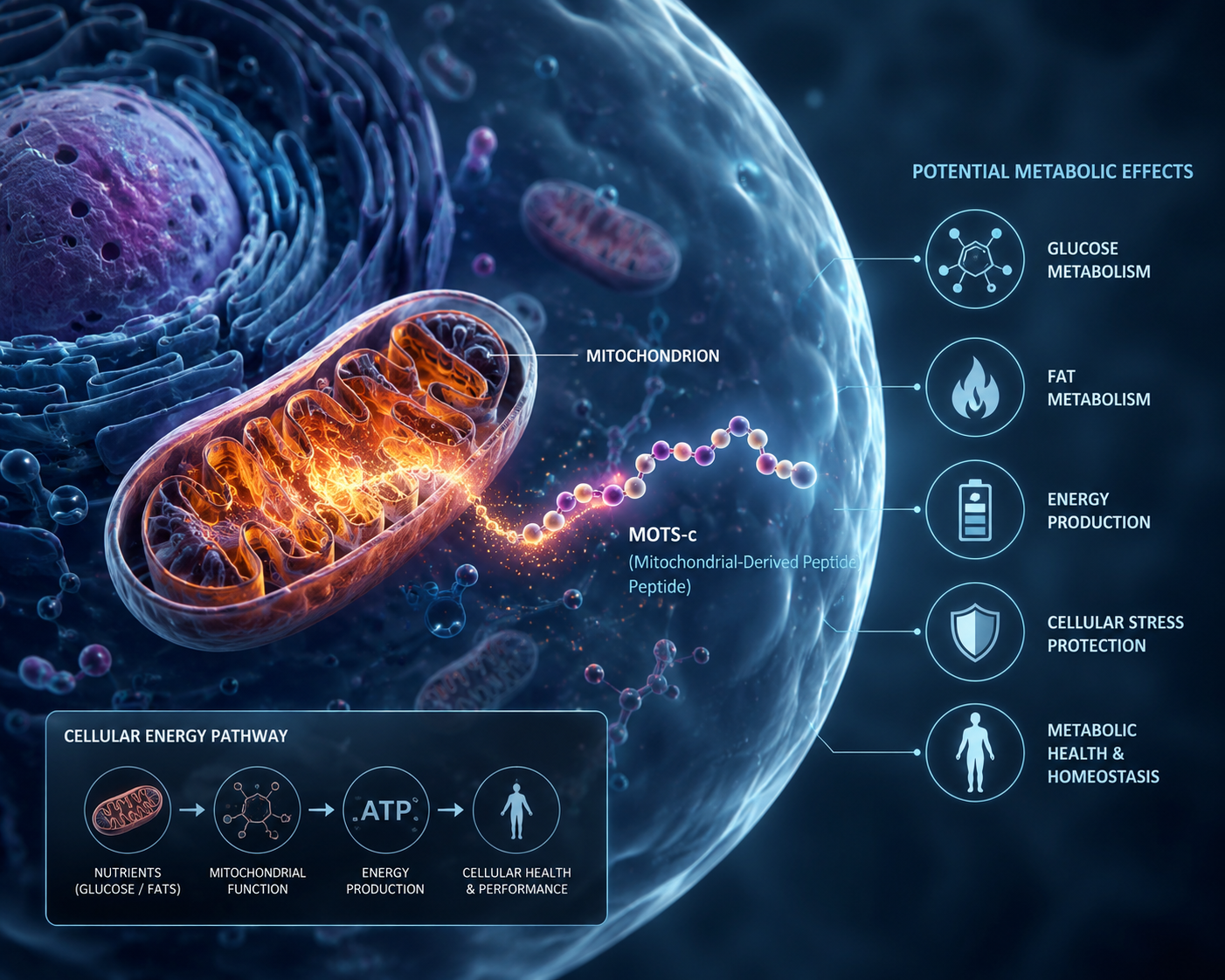
MOT‑C Peptide: What It Is, Why Scientists Study It, and What Readers Should Know
Peptides are having a moment in science and wellness, and MOT‑C is one of the newest names catching attention. As a biochemist, I’ll walk you through what MOT‑C is, why researchers are interested in it, and what the evidence actually shows—without hype, exaggeration, or unsafe claims.
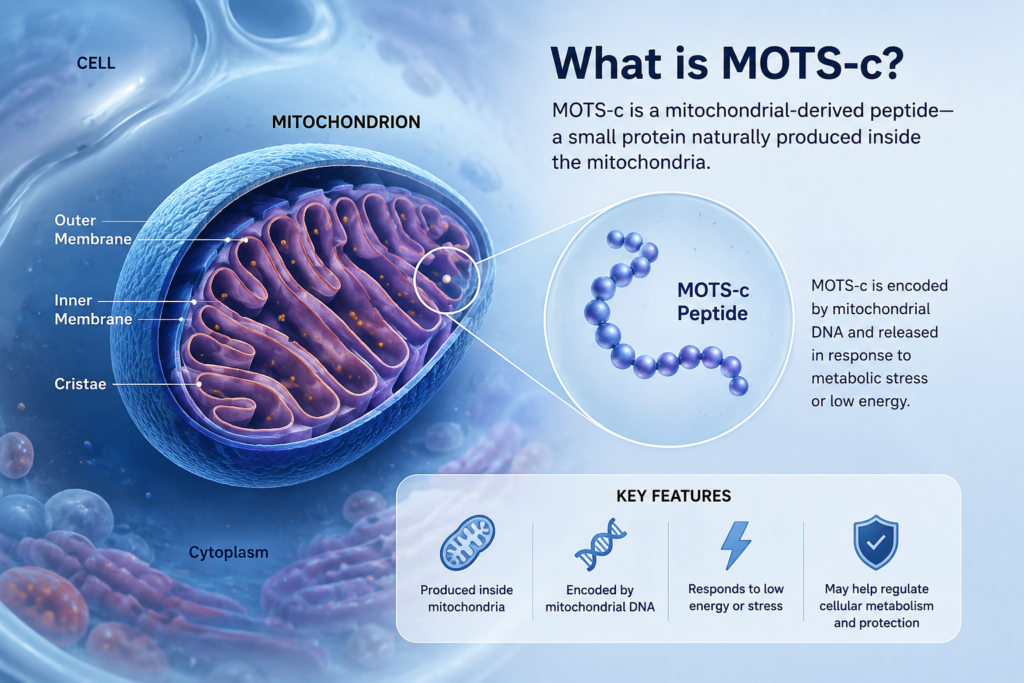
Is MOT‑C? MOT‑C is a mitochondrial‑derived peptide—a small protein naturally produced inside your mitochondria, the tiny “energy factories” in your cells.
Scientists discovered MOT‑C in 2015 while studying how cells respond to metabolic stress. Early research suggests MOT‑C may help regulate:
- Energy production
- Glucose metabolism
- Fat burning pathways
- Cellular stress responses
Because mitochondria play a central role in aging, metabolism, and chronic disease, MOT‑C has become an exciting target for research.
 Why Are Scientists Interested in MOT‑C?
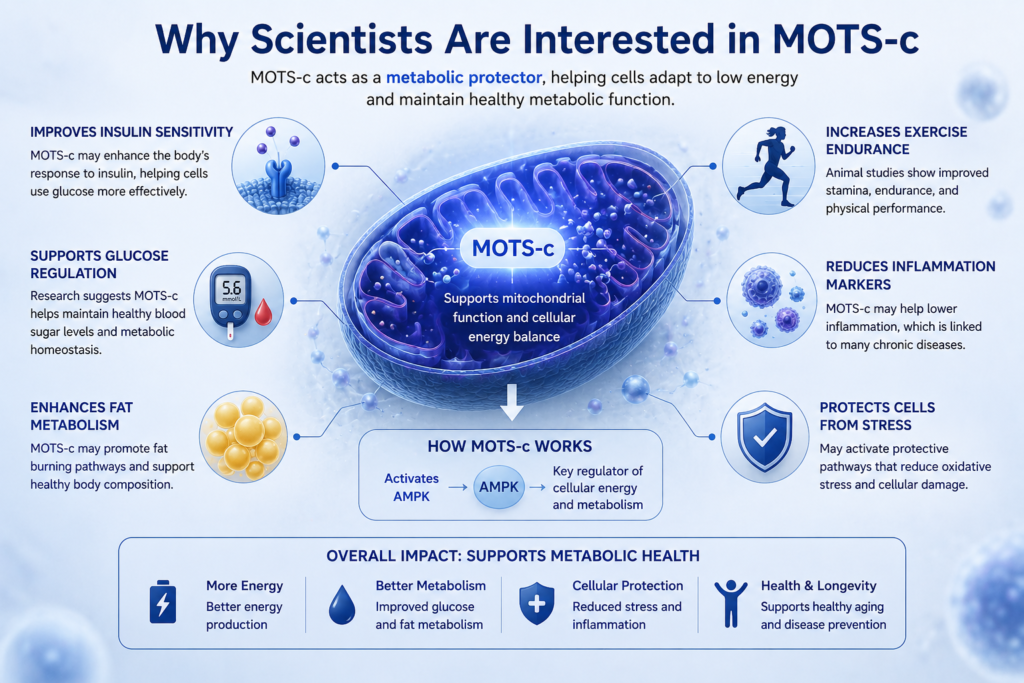
MOT‑C appears to act as a metabolic protector, helping cells adapt when energy levels drop. In laboratory and animal studies, MOT‑C has shown potential effects such as:
- Improving insulin sensitivity
- Supporting glucose regulation
- Enhancing fat metabolism
- Increasing exercise endurance
- Reducing inflammation markers
These findings come from preclinical research, meaning they were observed in animals or cell cultures—not in humans.
 Important: MOT‑C Is Not FDA‑Approved
As of today, MOT‑C is not approved by the U.S. Food and Drug Administration (FDA) for any medical use. It is not legally sold as a medication, and it has no approved human dosing, safety data, or clinical guidelines.
Any MOT‑C product sold online is unregulated, unverified, and may contain impurities or incorrect ingredients.
 What Does the Evidence Show So Far?
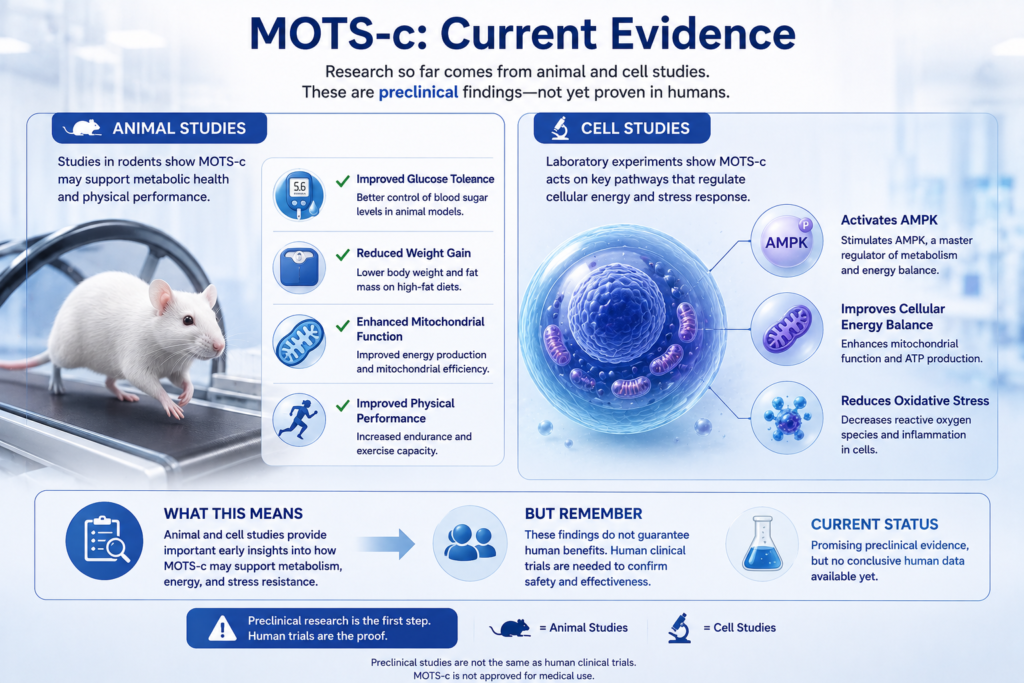
Here’s what current research tells us:
 Animal Studies
Rodent studies show MOT‑C may:
- Improve glucose tolerance
- Reduce weight gain on high‑fat diets
- Enhance mitochondrial function
- Improve physical performance
These results are promising—but animal studies do not guarantee human benefits.
Cell Studies
Laboratory experiments suggest MOT‑C may:
- Activate AMPK (a key metabolic regulator)
- Improve cellular energy balance
- Reduce oxidative stress
Again, these are mechanistic findings, not proven clinical outcomes.
 Human Clinical Trials
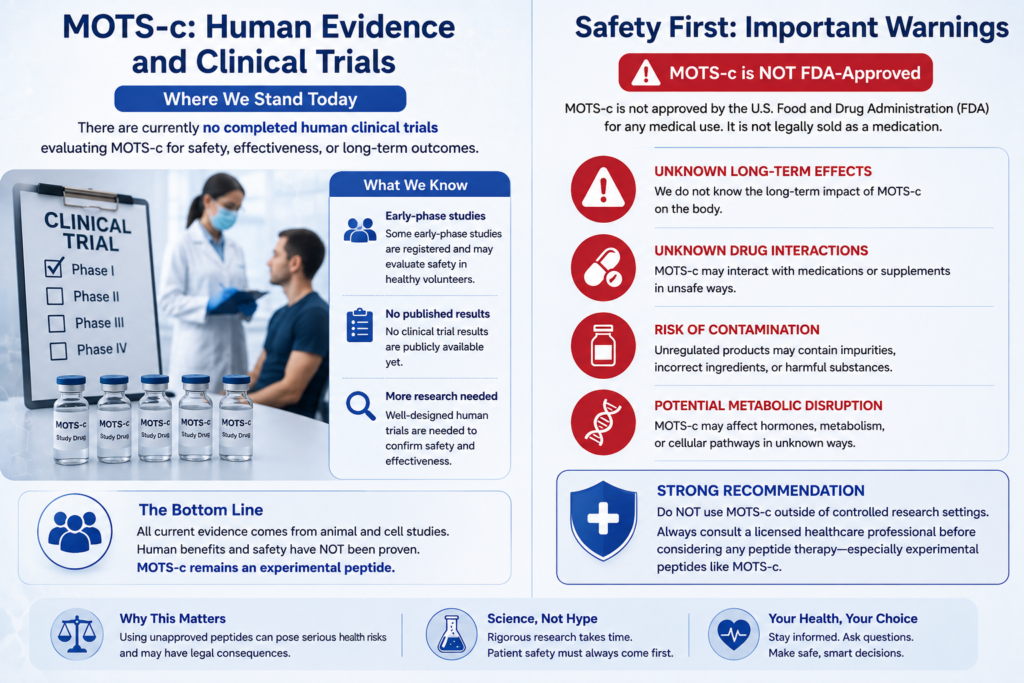
There are no completed human trials evaluating MOT‑C for safety, effectiveness, or long‑term outcomes. Some early‑phase studies are registered, but results are not yet available.
 Should People Use MOT‑C?
Because MOT‑C has no FDA approval, no verified human safety data, and no regulated manufacturing, it should not be used outside of controlled research settings.
Potential Risks
- Unknown long‑term effects
- Unknown interactions with medications
- Possible contamination in unregulated products
- Hormonal or metabolic disruption
 Strong Recommendation
Always consult a licensed healthcare professional before considering any peptide therapy—especially experimental peptides like MOT‑C.
 Summary for Readers
MOT‑C is a fascinating mitochondrial peptide with early research suggesting potential metabolic benefits. But right now, all evidence comes from animal and cell studies, and no human trials have confirmed safety or effectiveness.
Until more research is completed, MOT‑C should be viewed as a scientific discovery, not a supplement or treatment.
 Evidence Sources & Research Links
Here are reputable scientific and regulatory sources related to MOT‑C and peptide research:
Peer‑Reviewed Studies
- Kim SJ et al. Cell Metabolism. “Mitochondrial-derived peptide MOTS‑c promotes metabolic homeostasis.”
https://pubmed.ncbi.nlm.nih.gov/25651179/(pubmed.ncbi.nlm.nih.gov in Bing) - Reynolds JC et al. Aging Cell. “MOTS‑c is an exercise-induced mitochondrial peptide that increases physical performance.”
https://pubmed.ncbi.nlm.nih.gov/31637789/(pubmed.ncbi.nlm.nih.gov in Bing)
Clinical Trial Registries
- ClinicalTrials.gov – MOT‑C related studies
https://clinicaltrials.gov/search?term=MOTS-c(clinicaltrials.gov in Bing)
Regulatory Information
- FDA – Unapproved peptide products warning
https://www.fda.gov/consumers/consumer-updates(fda.gov in Bing)
Peptide Therapeutics Reviews
- Fosgerau K, Hoffmann T. Drug Discovery Today. “Peptide therapeutics: current status and future directions.”
- Lau JL, Dunn MK. Bioorganic & Medicinal Chemistry. “Therapeutic peptides: historical perspectives and future directions.”



Leave a Reply