

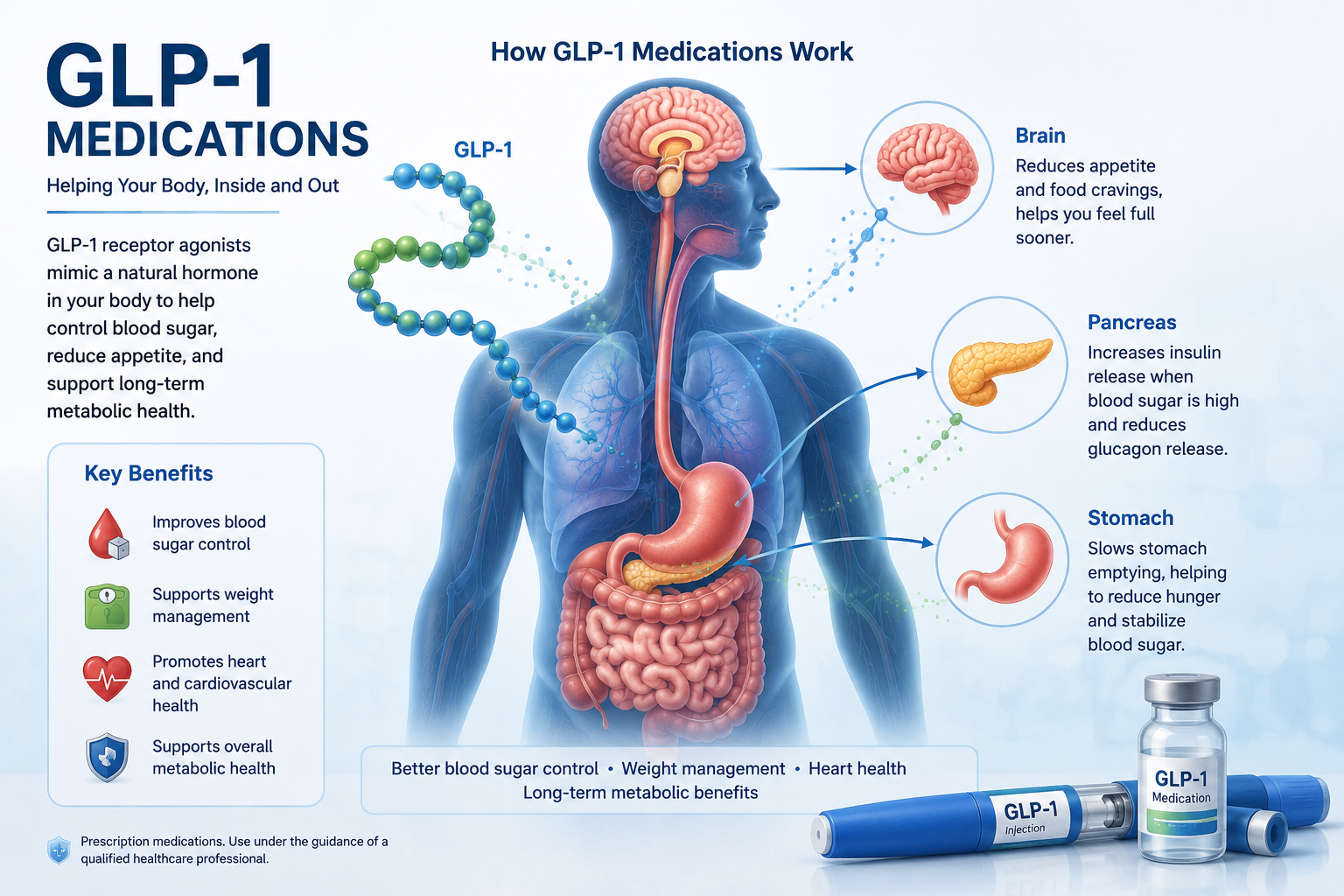
GLP‑1 receptor agonists—often called GLP‑1 medications—are some of the most widely discussed treatments today for type 2 diabetes and weight management. You may recognize them by brand names like Ozempic, Wegovy, Mounjaro, or Victoza. These medicines help control blood sugar, reduce appetite, and support long‑term weight loss.
This guide explains what GLP‑1 medications are, how they work, their benefits, side effects, and who should avoid them—using clear, simple language for all readers.
 What Are GLP‑1 Receptor Agonists?
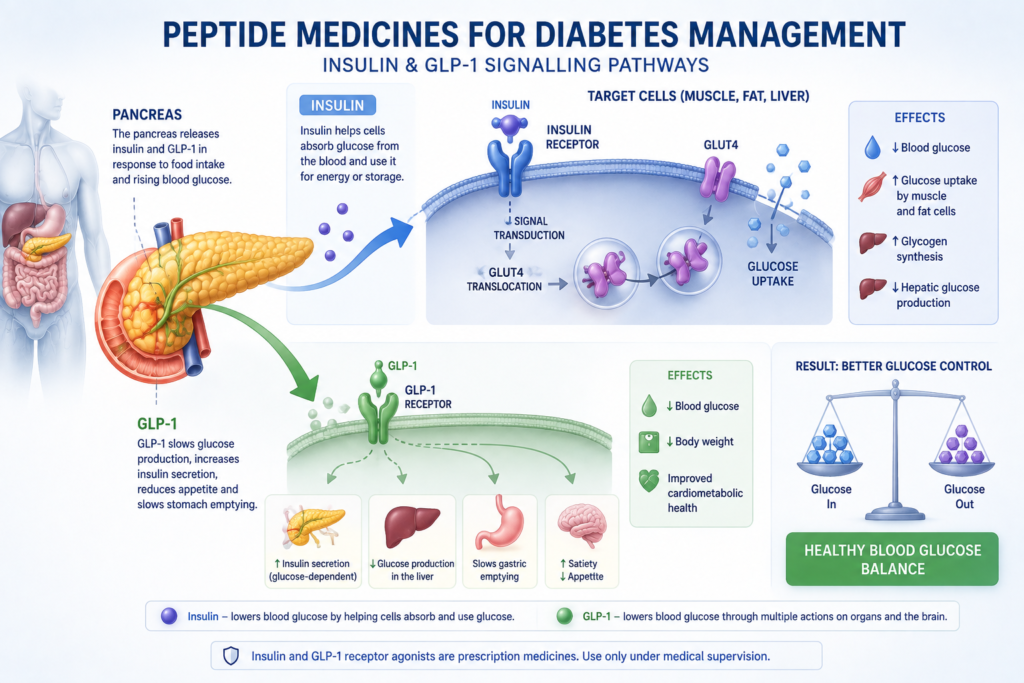
GLP‑1 receptor agonists are medications that act like a natural hormone in your body called GLP‑1 (glucagon‑like peptide‑1). This hormone helps regulate:
- Blood sugar
- Appetite
- Digestion
By mimicking GLP‑1, these medications help people feel full sooner, reduce hunger, and keep blood sugar levels more stable.
 Common GLP‑1 Medications (Brand & Generic)
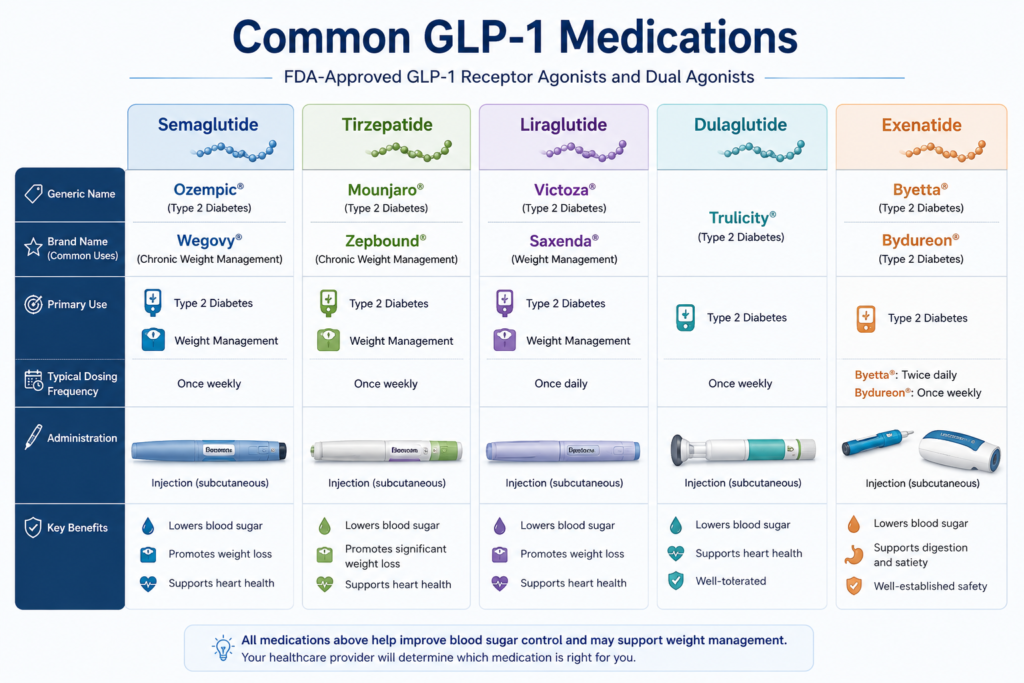
Semaglutide
- Brands: Ozempic (diabetes), Wegovy (weight loss)
- Use: Type 2 diabetes, chronic weight management
Tirzepatide (dual GLP‑1/GIP agonist, often grouped with GLP‑1s)
- Brands: Mounjaro (diabetes), Zepbound (weight loss)
- Use: Type 2 diabetes, weight management
Liraglutide
- Brands: Victoza (diabetes), Saxenda (weight loss)
- Use: Type 2 diabetes, weight loss
Dulaglutide
- Brand: Trulicity
- Use: Type 2 diabetes
Exenatide
- Brands: Byetta, Bydureon
- Use: Type 2 diabetes
 What Are GLP‑1 Medicines Used For?
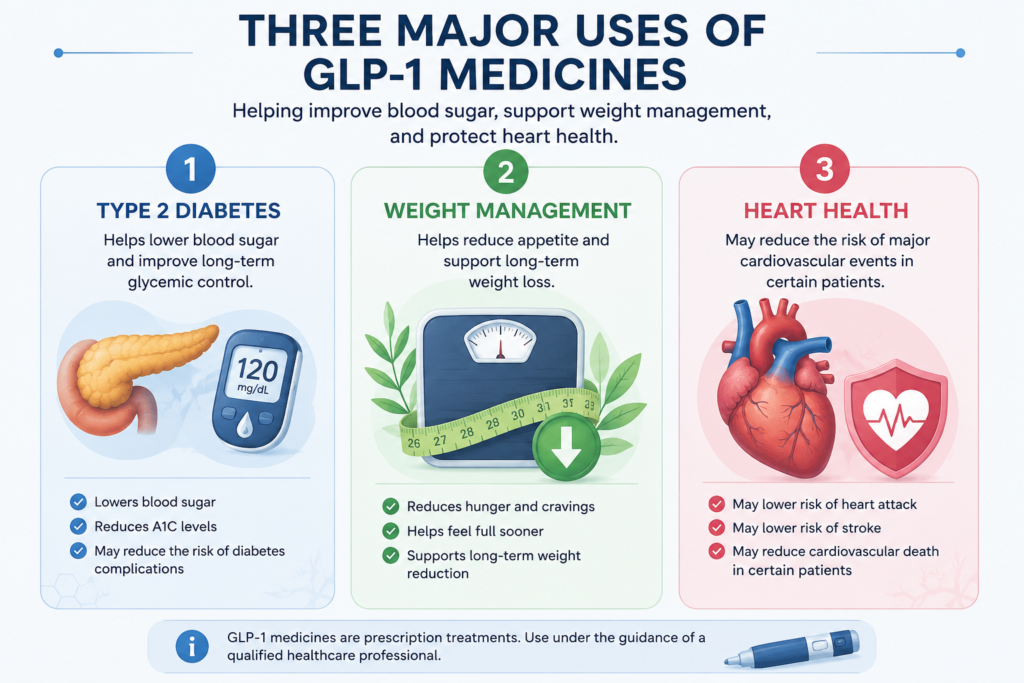
1. Type 2 Diabetes
GLP‑1 medications help:
- Lower blood sugar
- Reduce A1C (a long‑term blood sugar measure)
- Lower the risk of heart disease in some patients
2. Weight Management
Some GLP‑1 medications are FDA‑approved for weight loss. They help by:
- Reducing appetite
- Slowing stomach emptying
- Supporting long‑term weight reduction
3. Heart Health
Certain GLP‑1 medications have been shown to reduce the risk of:
- Heart attack
- Stroke
- Cardiovascular death
This is especially important for people with diabetes and heart disease.
 Common Side Effects
Most side effects are related to digestion and often improve over time.
Very Common
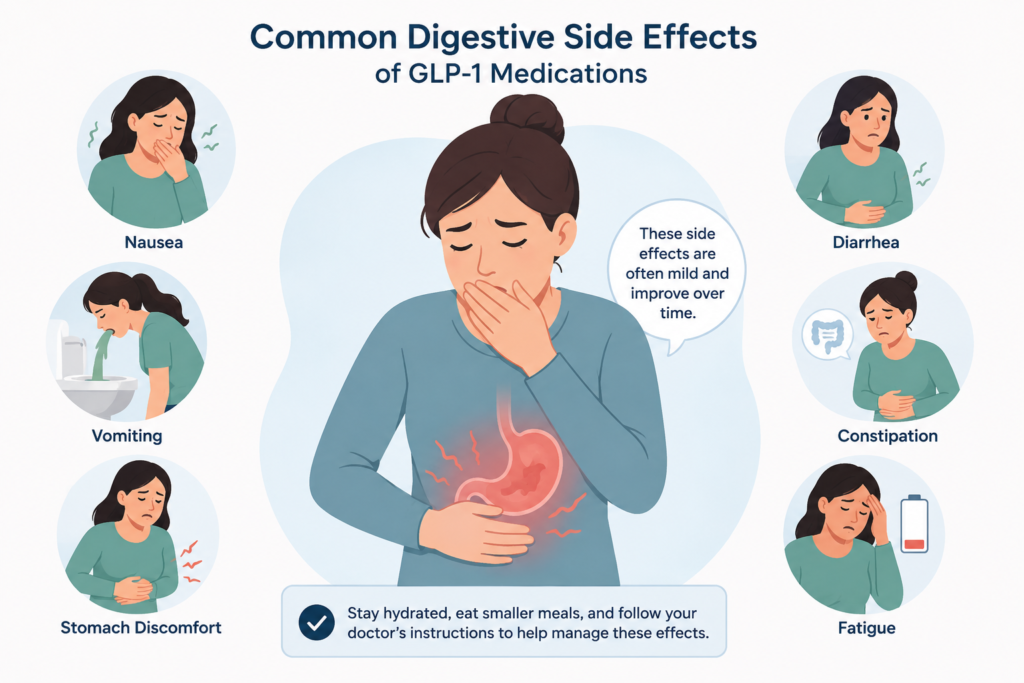
- Nausea
- Vomiting
- Diarrhea
- Constipation
- Stomach discomfort
Less Common
- Fatigue
- Headache
- Injection‑site reactions
Rare but Serious
Seek medical attention if these occur:
- Severe abdominal pain (possible pancreatitis)
- Signs of gallbladder problems
- Allergic reactions
- Vision changes
 Who Should Not Use GLP‑1 Medications?
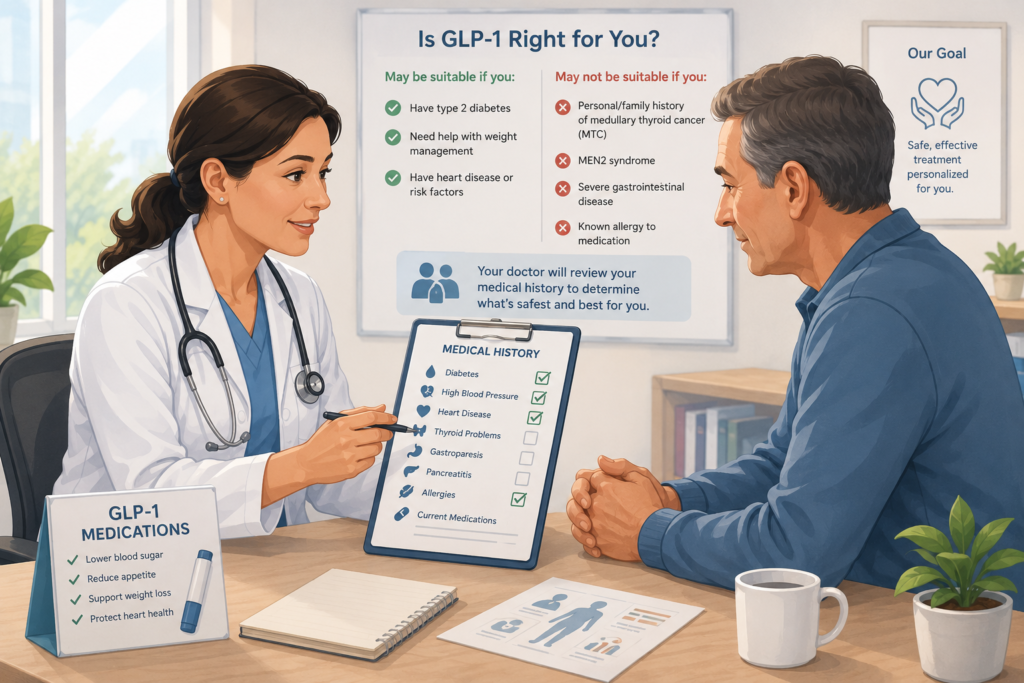
GLP‑1 medications are not recommended for people with:
- A personal or family history of medullary thyroid carcinoma (MTC)
- Multiple Endocrine Neoplasia syndrome type 2 (MEN2)
- Severe gastrointestinal disease (such as gastroparesis)
- Known allergy to the medication
These restrictions come from FDA warnings based on animal studies showing thyroid tumors at very high doses. Human studies have not confirmed the same risk, but the precaution remains.
 How Do GLP‑1 Medications Work?
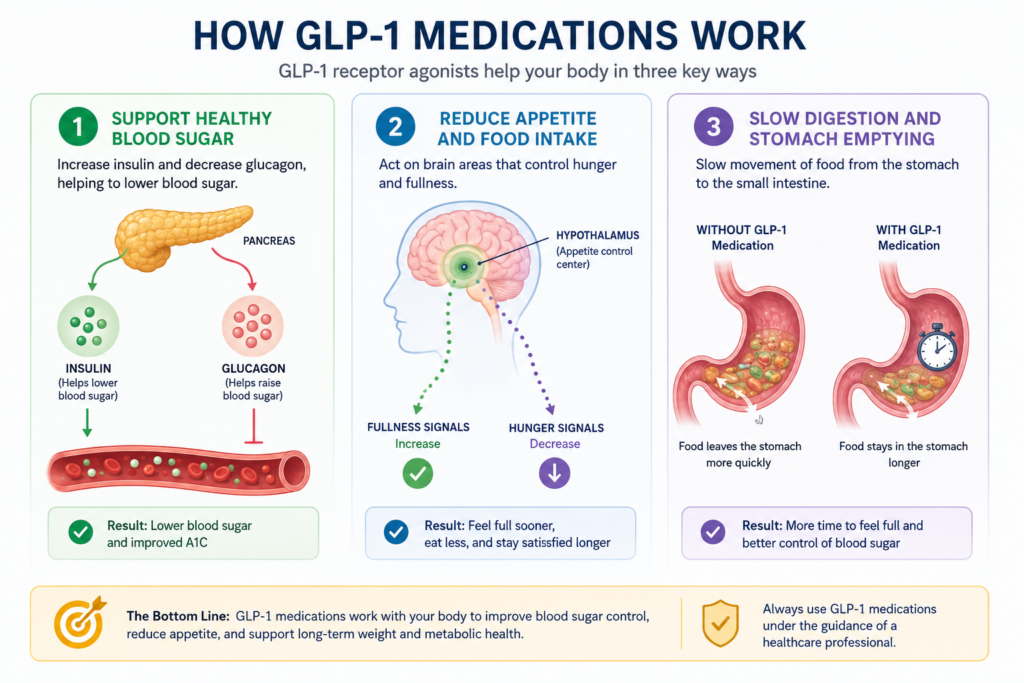
GLP‑1 medicines help your body in several ways:
1. Lower Blood Sugar
They increase insulin (the hormone that lowers blood sugar) and reduce glucagon (the hormone that raises blood sugar).
2. Reduce Appetite
They act on appetite centers in the brain, helping you feel full sooner.
3. Slow Digestion
Food moves more slowly through your stomach, helping control hunger and blood sugar spikes.
 Benefits Beyond Blood Sugar
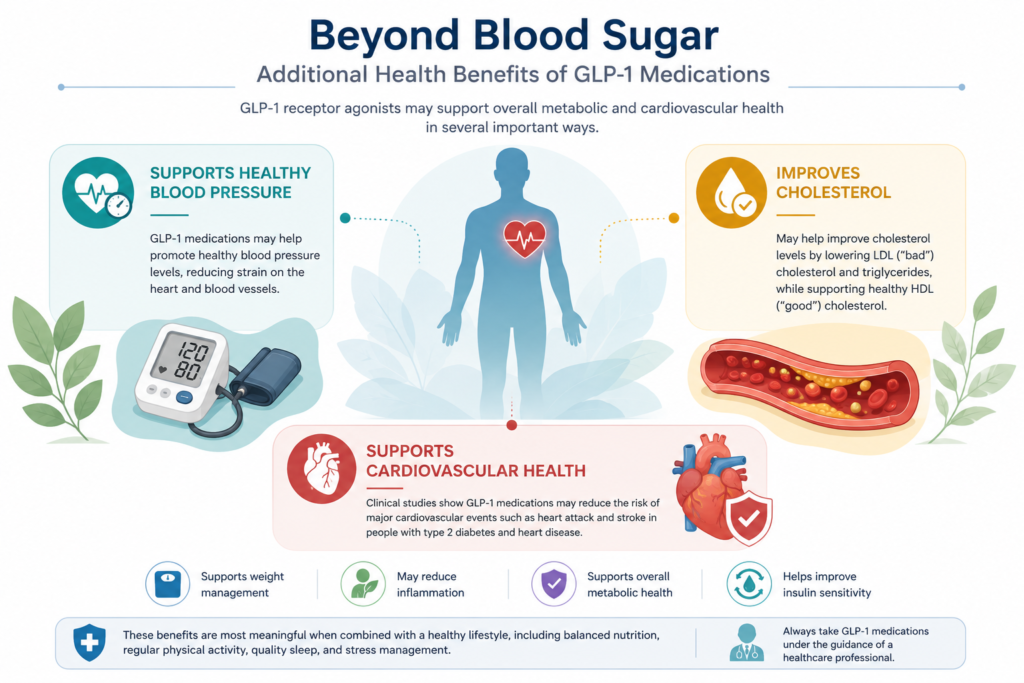
GLP‑1 medications may also help with:
- Lowering blood pressure
- Improving cholesterol
- Reducing inflammation
- Supporting long‑term weight management
These benefits make GLP‑1 medications an important option for people with diabetes, obesity, or metabolic health concerns.
 Summary for Website Visitors
GLP‑1 receptor agonists are modern medications that help people manage type 2 diabetes, weight, and overall metabolic health. They work by mimicking a natural hormone that controls appetite and blood sugar. These medicines are effective, widely used, and generally safe, with digestive side effects being the most common.
While there are FDA warnings related to rare thyroid cancers based on animal studies, human research has not shown a clear increase in cancer risk. Ongoing studies continue to monitor long‑term safety.
GLP‑1 medications are powerful tools—but like all medications, they should be used under the guidance of a qualified healthcare professional.

 References (General, Public‑Facing Sources)
- American Diabetes Association (ADA). Standards of Medical Care in Diabetes.
- U.S. Food and Drug Administration (FDA). Prescribing information for Ozempic, Wegovy, Victoza, Saxenda, Trulicity, Byetta, Bydureon, Mounjaro, Zepbound.
- AACE/ACE Guidelines. Comprehensive Type 2 Diabetes Management Algorithm.
- Marso SP et al. NEJM. Semaglutide and cardiovascular outcomes in type 2 diabetes.
- Wilding JPH et al. NEJM. Once‑weekly semaglutide in adults with overweight or obesity.
- Nauck MA, Meier JJ. Lancet. Incretin therapies and safety review.
- Bethel MA et al. Lancet Diabetes Endocrinol. Meta‑analysis of GLP‑1 receptor agonists and cardiovascular outcomes.
- Kristensen SL et al. BMJ. Systematic review and meta‑analysis of GLP‑1 agonists and cancer risk.
- Silverii GA et al. Diabetes Obesity & Metabolism. Meta‑analysis of obesity‑related cancers and GLP‑1 agonists.
Disclaimer
This article is intended for general educational and informational purposes only. It is not medical advice and should not be used as a substitute for guidance from a qualified healthcare professional. The information presented is a general summary of currently available evidence and is not intended to establish clinical recommendations or treatment decisions. This article should not be quoted, cited, or used as an authoritative source in clinical studies, scientific publications, medical journals, regulatory submissions, or other scholarly work. Readers should refer to the original peer‑reviewed studies, clinical guidelines, regulatory documents, and other primary sources when using evidence for clinical, academic, or research purposes.




Leave a Reply